
Healing Outdoors Under the Big Sky: Kids at the Ranch Hit the Trails
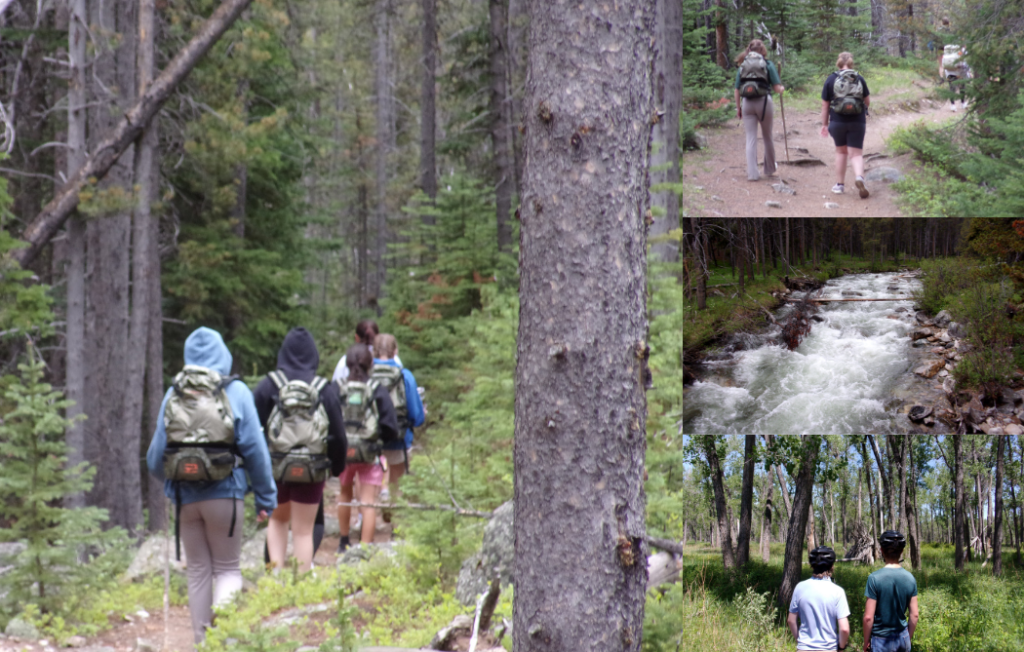
For kids at the Ranch, time in Montana’s wilderness is more than a day outdoors—it’s a chance to find joy, build confidence, and create lasting memories. Earlier this summer, a group set out on the trails of the Absaroka-Beartooth Wilderness, many experiencing its beauty for the very first time. It was a powerful reminder of how healing outdoors can help kids see new possibilities for themselves.
Experiencing Montana’s Outdoors for the First Time
Some hiked rocky paths, others spotted wildlife, felt the spray of a rushing river, or paused to take in breathtaking mountain views. For many, it was an adventure that showed not only the wonder of Montana but also the strength and resilience within them.
Why These Moments Matter
These simple but profound experiences give kids a sense of belonging and remind them that joy is possible. They help kids feel connected to the world around them and confident in what they can achieve. With the encouragement of caring professionals, the memories made on these trails will last long after the hike ends.
At YBGR, we believe healing outdoors is just as vital as the work we do indoors—thriving under the wide-open skies of Montana.
Stay Connected
Stay tuned to our news updates for the latest from across Montana, and follow us on social media. You can find us on LinkedIn at Yellowstone Boys and Girls Ranch, Instagram at @ybgr_cares, and Facebook at YBGR and Yellowstone Boys and Girls Ranch.

17 Quotes on Being the Calm in Our Kids’ Storm

Have you ever witnessed the storm—the choppy waters of a child’s big emotions? Of course! Like us, our little ones are human—experiencing the full spectrum of emotions. But unlike us, their brains are still developing the skills to navigate and cope.
In moments when kids are experiencing immense, turbulent feelings, they look to us for safety. To be the calm gently guiding them through their storm—the anchor in their waves.
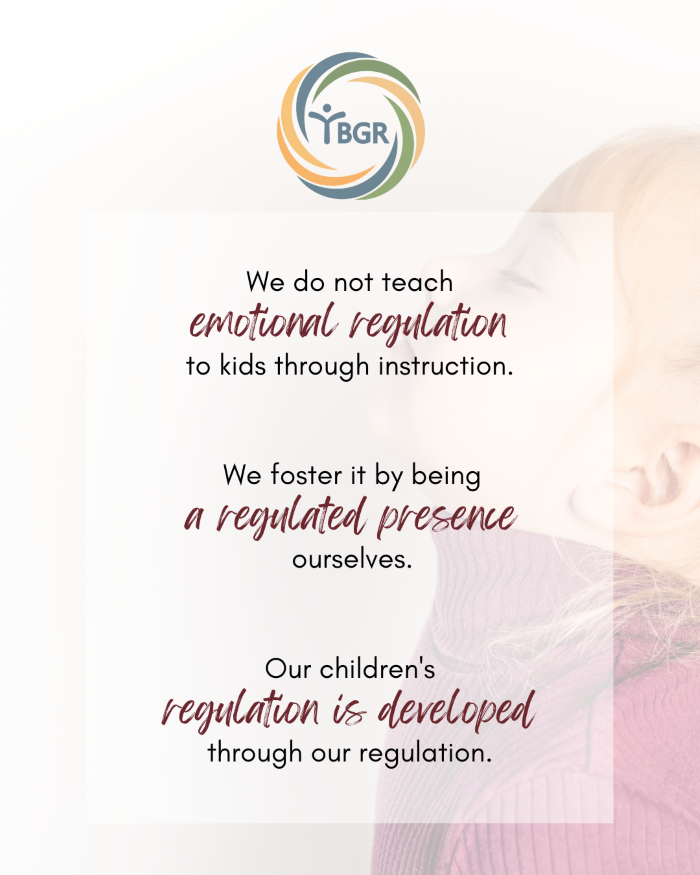
Children learn emotional regulation through our regulated presence. Simply put, we learn to self-soothe through thousands of instances of being soothed by someone else.
Below are seventeen quotes on emotional regulation—on being the calm in our kids’ storm.
Quotes on Being the Calm in Our Kids’ Storm
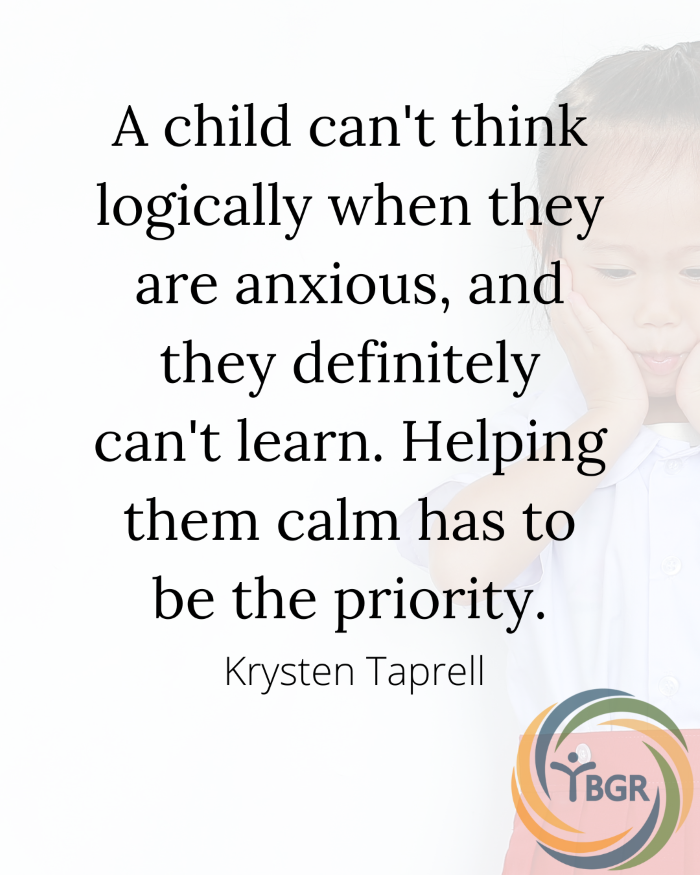
Quote 1: A child can’t think logically when they are anxious, and they definitely can’t learn. Helping them calm has to be the priority. – Inspired by Krysten Taprell, @the_therapist_parent
When kids become flooded with emotion, logical thinking takes a backseat. Our primary focus must be to soothe—sharing our calm.
Hold space and validate feelings. Then, once strong emotions such as anxiety have subsided, we can effectively teach.
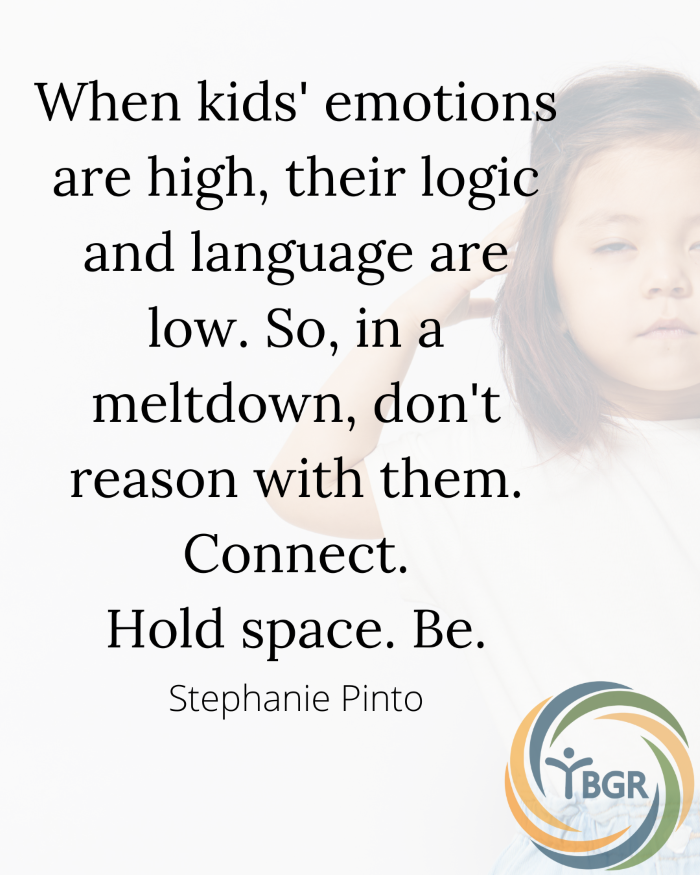
Quote 2: When kids’ emotions are high, their logic and language are low. So, in a meltdown, don’t reason with them. Connect. Hold space. Be. – Stephanie Pinto
When children are experiencing big emotions, it’s not the time for reasoning or a lecture. Attend to their feelings first. Then, after they have calmed, you can effectively coach them.
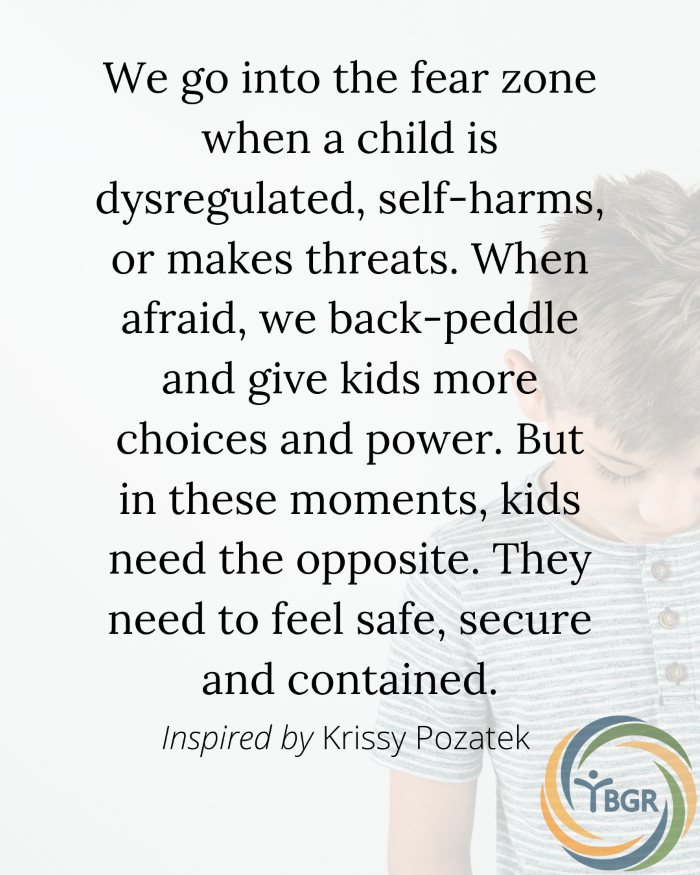
Quote 3: We go into the fear zone when a child is dysregulated, self-harms, or makes threats. When afraid, we back-peddle and give kids more choices and power. But in these moments, kids need the opposite. They need to feel safe, secure, and contained. – Inspired by Krissy Pozatek
When dysregulated, kids need safety, security, and boundaries that provide comfort. Be their safe haven—the anchor in their storm.
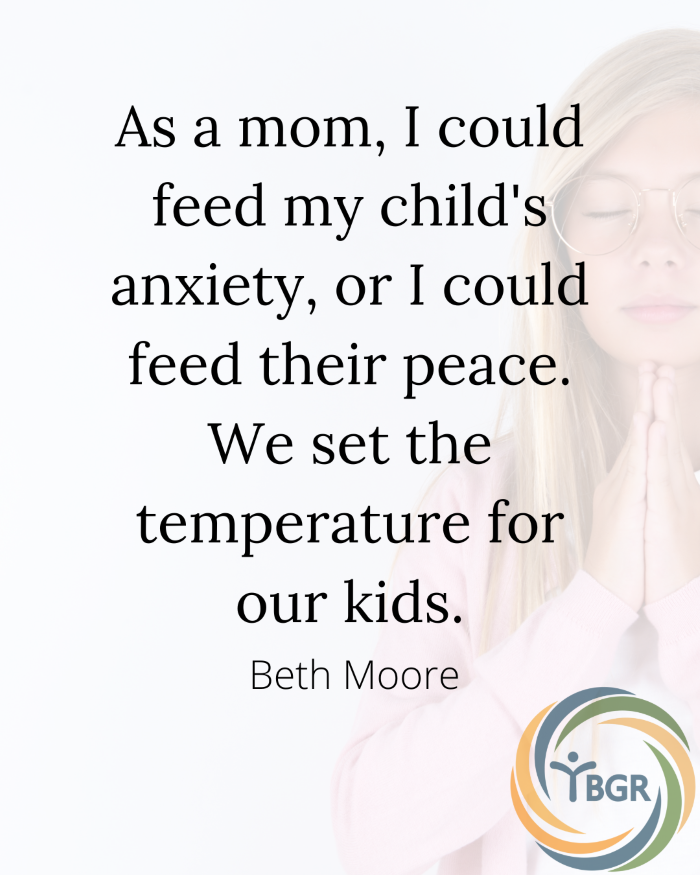
Quote 4: As a mom, I could feed my child’s anxiety, or I could feed their peace. We set the temperature for our kids. – Beth Moore
We hold the power to shape our children’s emotional well-being. Remember—we set the tone. Feed their peace.
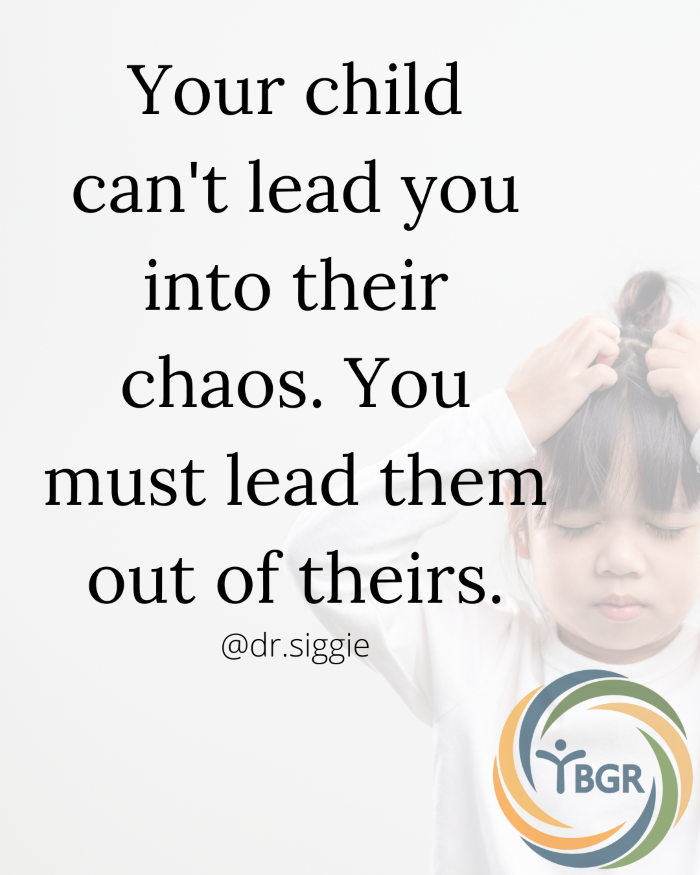
Quote 5: Your child can’t lead you into their chaos. You must lead them out of theirs. – @dr.siggie
Our children need us to be a calm, steady force—especially during times when they are experiencing turbulent emotions.
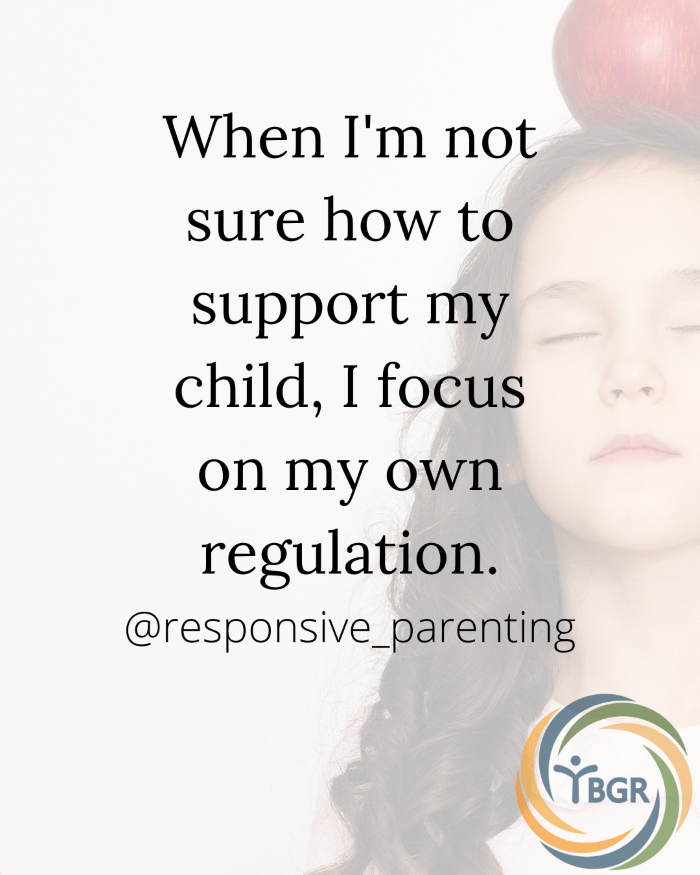
Quote 6: When I’m not sure how to support my child, I focus on my own regulation. – @responsive_parenting
When you don’t know how to best support your kids, try turning inward.
By noticing, understanding, and regulating our emotions, we can better provide the calm and stability our children need—approaching parenting with a more centered, grounded perspective.
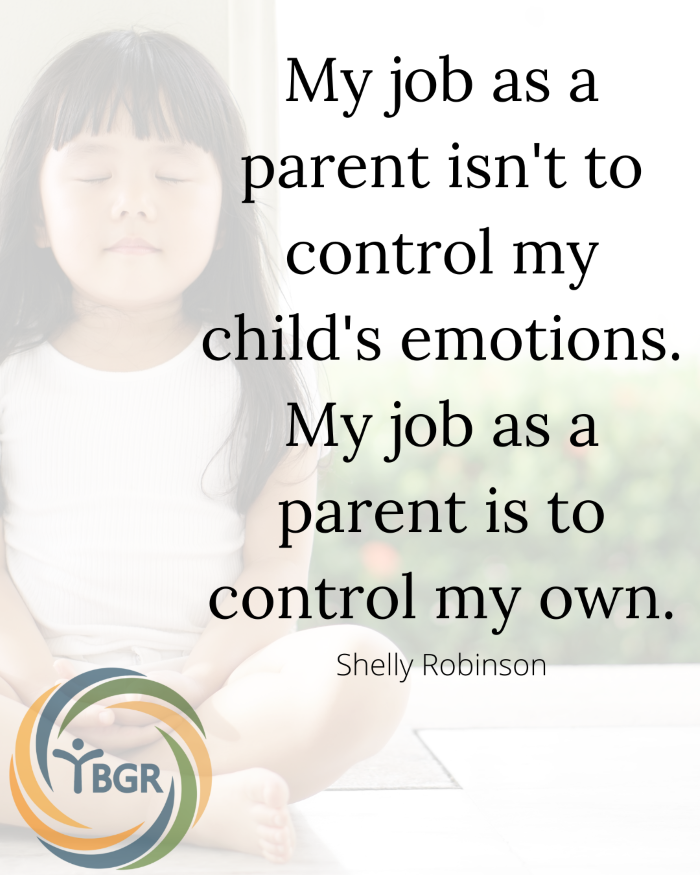
Quote 7: My job as a parent isn’t to control my child’s emotions. My job as a parent is to control my own. – Shelly Robinson
We can’t control our children’s feelings, but we can teach them how to navigate them by how we navigate our own. And in doing so, we can better provide a safe, supportive environment for them to grow.
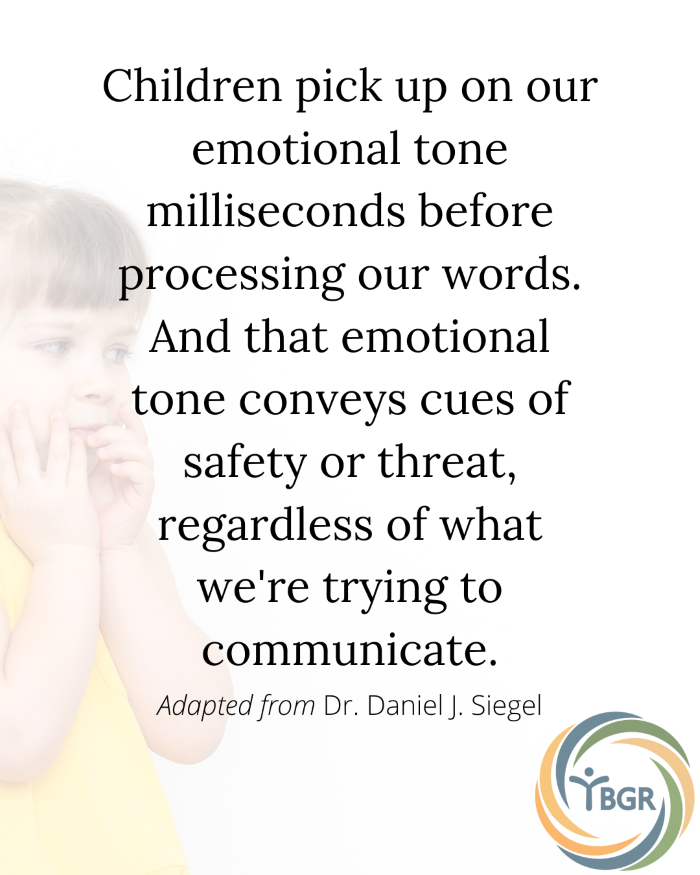
Quote 8: Children pick up on our emotional tone milliseconds before processing our words. And that emotional tone conveys cues of safety or threat, regardless of what we’re trying to communicate. – Adopted from Dr. Dan Siegel
Our kids are always listening, not just to our words but to the emotions behind them. Create a safe, nurturing environment—one where children feel loved and protected.
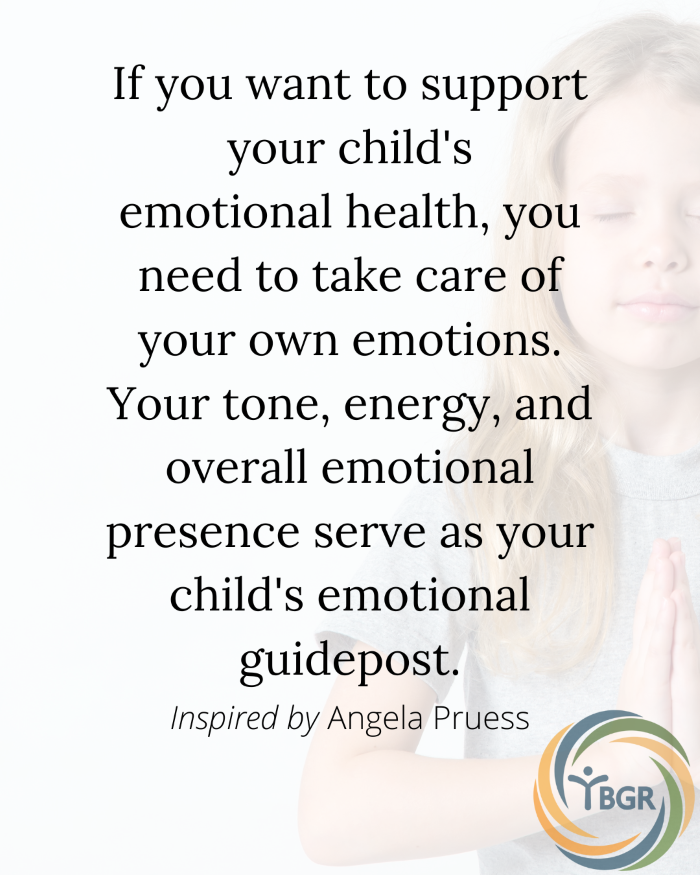
Quote 9: If you want to support your child’s emotional health, you need to take care of your own emotions. Your tone, energy, and overall emotional presence serve as your child’s emotional guidepost. – Inspired by Angela Pruess
Our wellness shapes our children’s wellness. Caring for ourselves is an act of love—for both us and our little ones.
Quote 10: Our responses influence our children’s behavior. A slight shift in our communication from defensive to proactive can make all the difference in shaping their stress response. – Lori Petro
Parenting isn’t just about our kid’s behavior; it’s also about our own. The energy we put out can either fuel their fire or calm their storm. Emotions feed off emotions.
Quote 11: Our confidence has the power to weaken the fear that our children experience. – @parenting_pathfinders
Our confidence is a mighty force—weakening the grip of fear our kid’s experience. When we embody self-assurance, we impart a sense of safety and security.
Quote 12: The goal is NOT to never get triggered. You’re human. You will get triggered sometimes. The goal is to learn to regulate and respond to those triggers with intention. – @the.peaceful.mother
A trigger is anything that sets you off emotionally and activates memories of trauma. It’s particular to you and what your experiences have been.
Triggers may include feeling:
- Powerless
- Judged
- Unheard
- Unsafe
- Disrespected
- Unloved
- Controlled
Our ability to navigate triggers and the emotions springing from them is tied to our ability to understand feelings, where they come from, and tolerate the sensations that arise when we experience them.
When we create space for ourselves to do this, we’re better able to create space for our kids.
Quote 13: Teaching a child to shut down their emotions does not make them calm. It makes them numb. Calmness is a skill that develops after a child has learned to feel their emotions, not ignore them. – Inspired by Eli Harwood
Calmness is not achieved by shutting down our feelings but by learning to navigate and regulate the storm within.
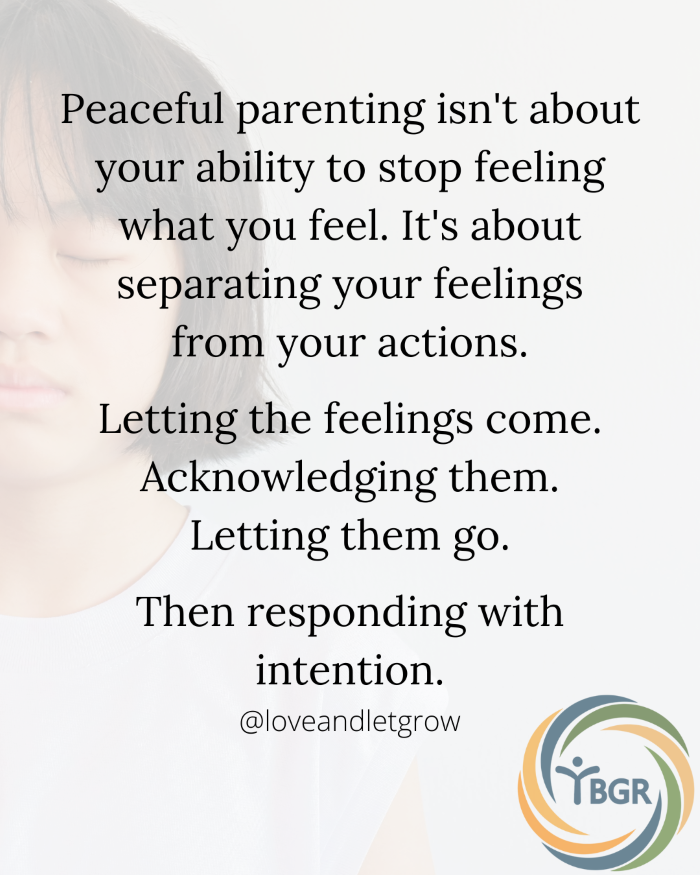
Quote 14: Peaceful parenting isn’t about your ability to stop feeling what you feel. It’s about separating your feelings from your actions. Letting the feelings come. Acknowledging them. Letting them go. Then, responding with intention. – @loveandletgrow
Feel the feeling but don’t become the emotion.
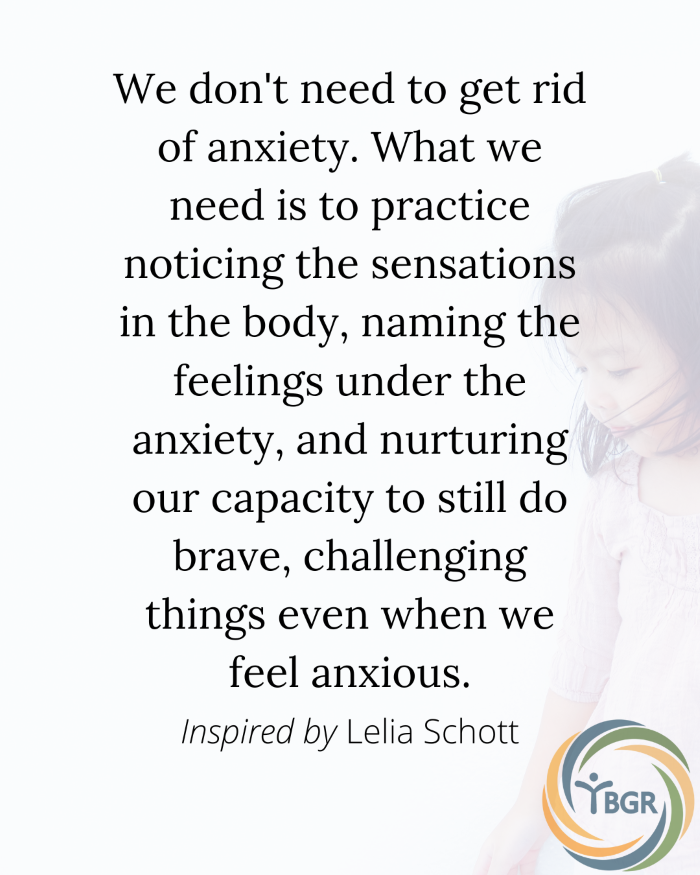
Quote 15: We don’t need to get rid of anxiety. What we need is to practice noticing the sensations in the body, naming the feelings under the anxiety, and nurturing our capacity to still do brave, challenging things even when we feel anxious. – Inspired by Lelia Scott
Instead of trying to rid ourselves of big feelings like anxiety, let’s shift our focus toward developing the skills to navigate them gracefully.
One skill for navigating emotions, particularly anxiousness, is mindfulness—becoming aware of the sensations in our body. By tuning in, we can identify the feelings beneath the surface—acknowledging and naming them without judgment.
Foster self-compassion, and remember, it’s not about eradicating our emotions but developing skills to coexist with them.
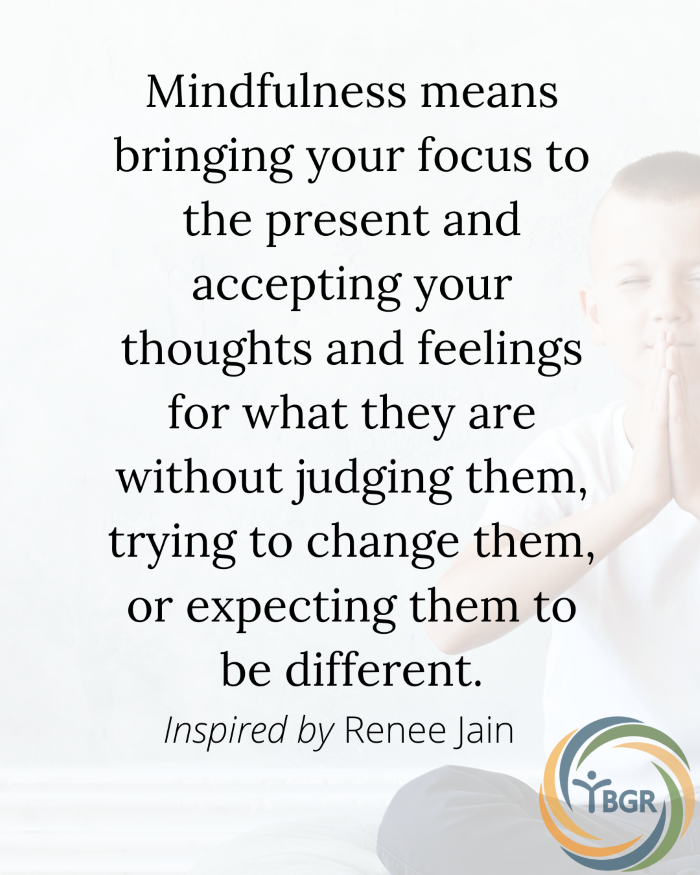
Quote 16: Mindfulness means bringing your focus to the present and accepting your thoughts and feelings for what they are without judging them, trying to change them, or expecting them to be different. – Inspired by Renee Jain
To be mindful is to bring your focus to the present moment—accepting your thoughts and feelings for what they are without judgment or trying to change them.
In a world that often pulls us in different directions, mindfulness offers a sanctuary of peace and acceptance, inviting us to notice the beauty in the simplest moments and cultivate deeper self-awareness.
By taking a moment to:
🧘♀️ Pause
🧘♀️ Breathe
🧘♀️ Embrace the present
We can better anchor ourselves during waves of emotion, support our kids during their storms, and live with clarity, authenticity, and gratitude.
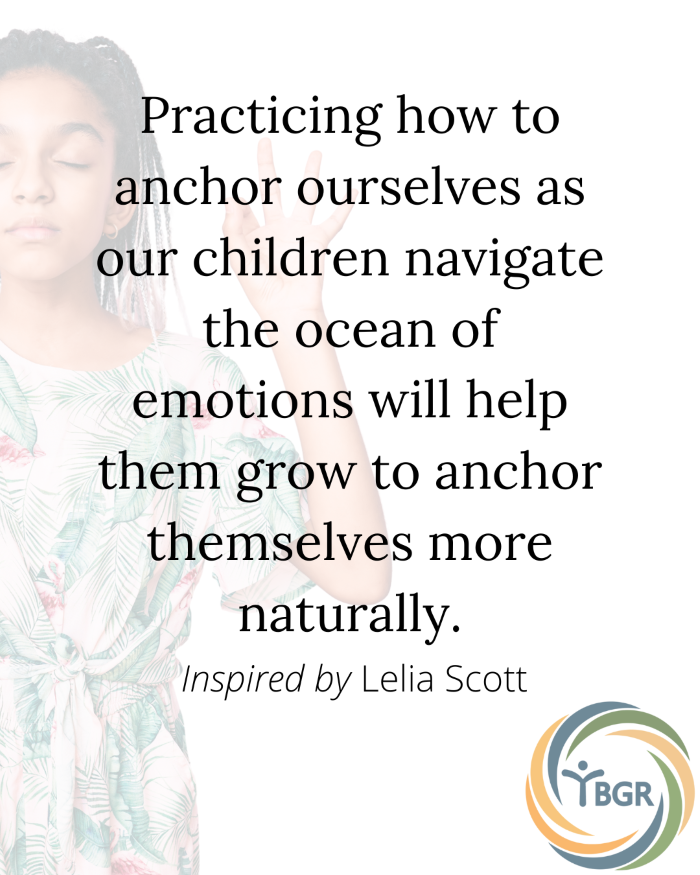
Quote 17: Practicing how to anchor ourselves as our children navigate the ocean of emotions will help them grow to anchor themselves more naturally. – Inspired by Lelia Scott
When we practice grounding ourselves alongside our children’s turbulent emotions, we teach them the art of anchoring themselves. Through our self-awareness and regulation, we create safety—modeling inner stability and guiding toward emotional resilience.
Want More?
Check out the rest of our blog and follow us on social media. You can find us on LinkedIn at Yellowstone Boys and Girls Ranch, Instagram at @ybgr_cares, and Facebook at YBGR and Yellowstone Boys and Girls Ranch.

Saving Lives: Suicide Warning Signs and How to Intervene

Did you know that every year, nearly 800,000 people die by suicide? That’s roughly one death every 40 seconds. It’s a startling number, and sadly, 90% of those lost will wrestle with mental health conditions.
It’s National Suicide Prevention Month, and we’re on a mission to spread knowledge to save lives. Today, we’re exploring suicide warning signs and equipping you with the tools to help.
To start that journey, take a second to watch this brief video released shortly after actor Robin Williams’s death.
Robin fit the criteria for many suicide risk factors, including depression, bipolar disorder, a chronic health condition, and a history of substance abuse.
Warning Signs That Someone May Attempt Suicide
You can’t always see how people are feeling on the inside, which can make it hard to identify when someone is struggling. However, there are often outward suicide warning signs when people are grappling with thoughts of suicide.
Talking about:
- Wanting to die
- Great guilt or shame
- Being a burden to others
Feeling:
- Empty, hopeless, trapped, or having no reason to live
- Extremely sad, more anxious, agitated, or full of rage
- Unbearable emotional or physical pain
Changing behavior, such as:
- Making a plan or researching ways to die
- Withdrawing from friends, saying goodbye, giving away important items, or making a will
- Taking dangerous risks, such as driving extremely fast
- Displaying extreme mood swings
- Eating or sleeping more or less
- Using drugs or alcohol more often
What to Do if You Think Someone May Be Considering Suicide
If you suspect that someone may be considering suicide, talk to them about your concerns. Begin the conversation by asking questions in a non-judgmental and non-confrontational way.
Talk openly and don’t be afraid to ask direct questions, such as “Are you thinking about suicide?”
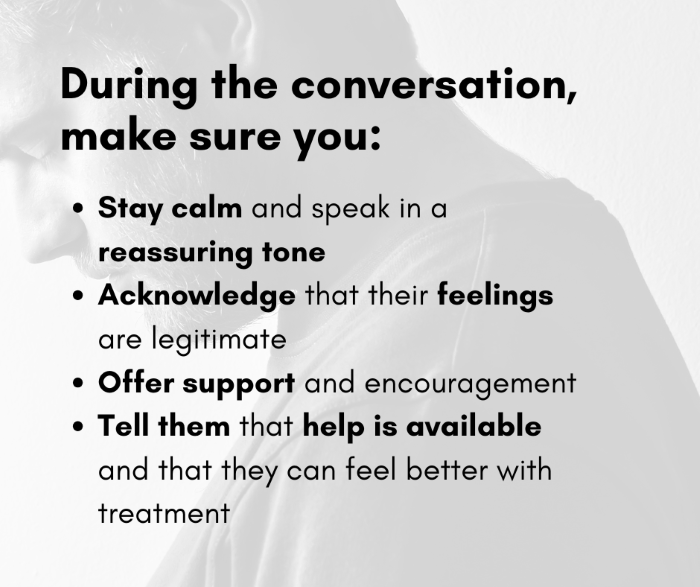
Be prepared with resources to help, and don’t hesitate to assist them in utilizing the tools you’ve provided.
In Cases of Imminent Danger
According to the National Alliance on Mental Illness (NAMI), if you notice someone doing any of the following, they should get care immediately:
- Putting their affairs in order or giving away their possessions
- Saying goodbye to friends and family
- Having a mood shift from despair to calm
- Planning, looking to buy, steal, or borrow the tools to complete suicide, such as a firearm or medication
Check out the graphic below for information on what to do in case of an emergency.
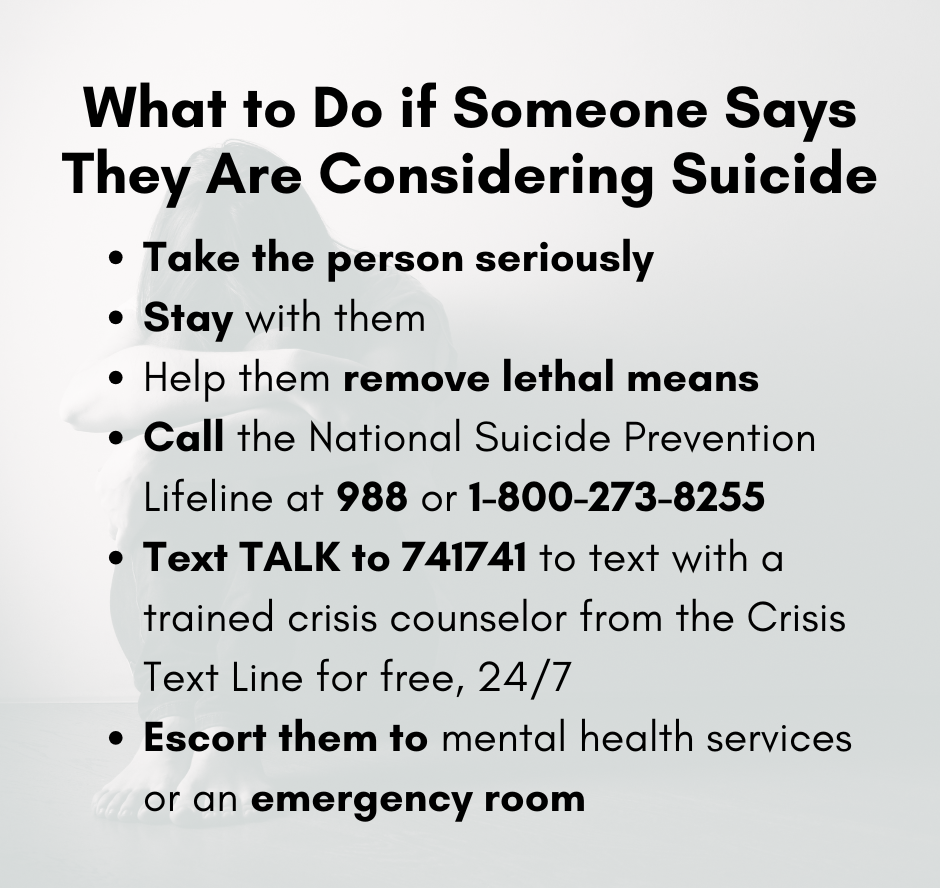
If someone has an immediate plan for suicide and means to exercise it, they need to go to the ER and be evaluated by a mental health professional for a higher level of care. And until that happens, they mustn’t be left alone.
Are You or Your Child Struggling?
You don’t need to bear the heavy weight of sadness without support. It might feel like you’re alone, but there are people out there who care about you and want to help. Call a friend or family member, and don’t be afraid to reach out to the National Suicide Prevention Lifeline by dialing 988.
If you have a child who is struggling, know that we’re here to help. We provide mental health support to kids and families across Montana. To learn more, contact us here.
Want More Resources?
If you found this article helpful, check out the rest of our blog today and follow us on social media. You can find us on LinkedIn at Yellowstone Boys and Girls Ranch, Instagram at @ybgr_cares, and Facebook at Yellowstone Boys and Girls Ranch and YBGR.
Training Strengthens Support for Native Youth in Foster Care
For Native youth in foster care, healing is about more than stability. It’s about belonging—being connected to culture, tradition, and community. Without that, children risk losing not only their sense of place but their sense of self.
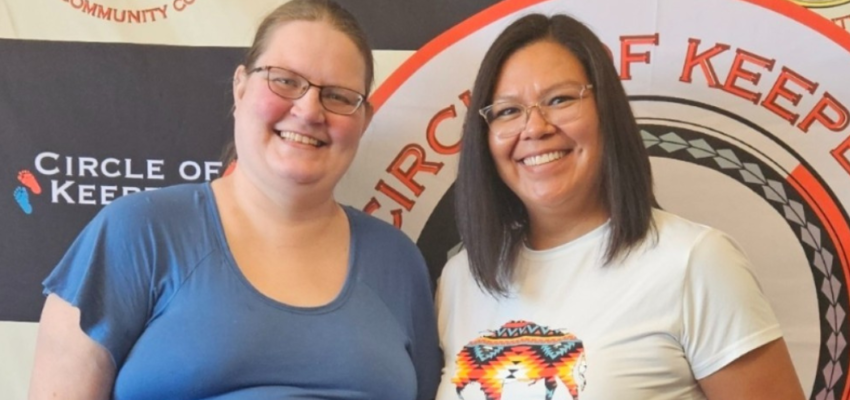
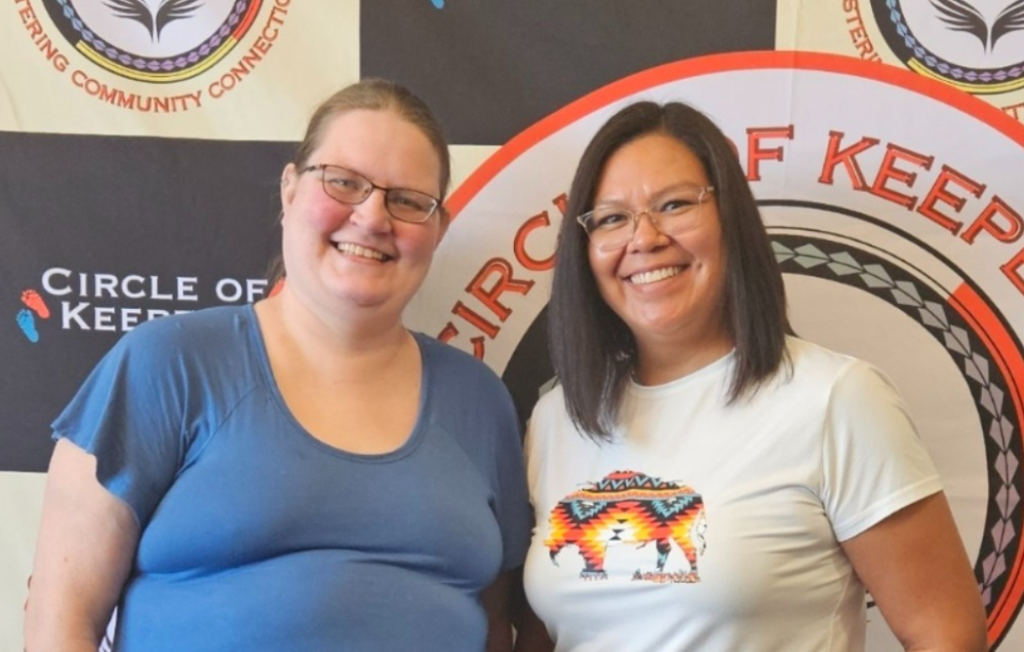
That’s why Josie Brady, Native American Services Coordinator, and Kayla Goble, Family Resource Specialist, recently attended the Circle of Keepers Train the Trainer event in Billings, held alongside the Rocky Mountain Tribal Leaders Council’s Walking the Sacred Path Conference. The training provided them with new tools to ensure that Native youth in foster care feel seen, valued, and supported in ways that honor their identity.
A Deeper Understanding of Cultural Healing
The sessions, led by Rita Hart, MSW (Jicarilla Apache and Choctaw) and Kelly Tannehill, MSW, centered on the sacred meaning of the circle in Native traditions—symbolizing protection, belonging, and strength without end. Participants explored how trauma histories intersect with cultural healing practices, gaining insight into the unique challenges Native youth face.
For Josie and Kayla, this was more than professional development—it was a chance to deepen their understanding of how culture itself can be a source of healing.
Strengthening Circles of Care
Through this training, Josie and Kayla strengthened their ability to help create natural, protective circles of care for Native youth in foster care. Their commitment reflects YBGR’s promise to walk alongside every child, ensuring each one feels embraced by a community of caring people. Because when both stability and culture surround Native youth in foster care, they don’t just survive—they thrive.
Stay Connected
Stay tuned to our news updates for the latest from across Montana, and follow us on social media. You can find us on LinkedIn at Yellowstone Boys and Girls Ranch, Instagram at @ybgr_cares, and Facebook at YBGR and Yellowstone Boys and Girls Ranch.
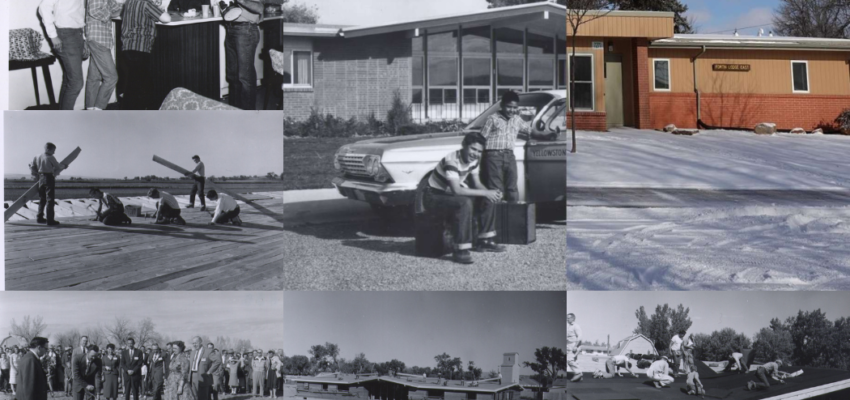
Fortin Lodge: Honoring the Fortins’ Lasting Impact
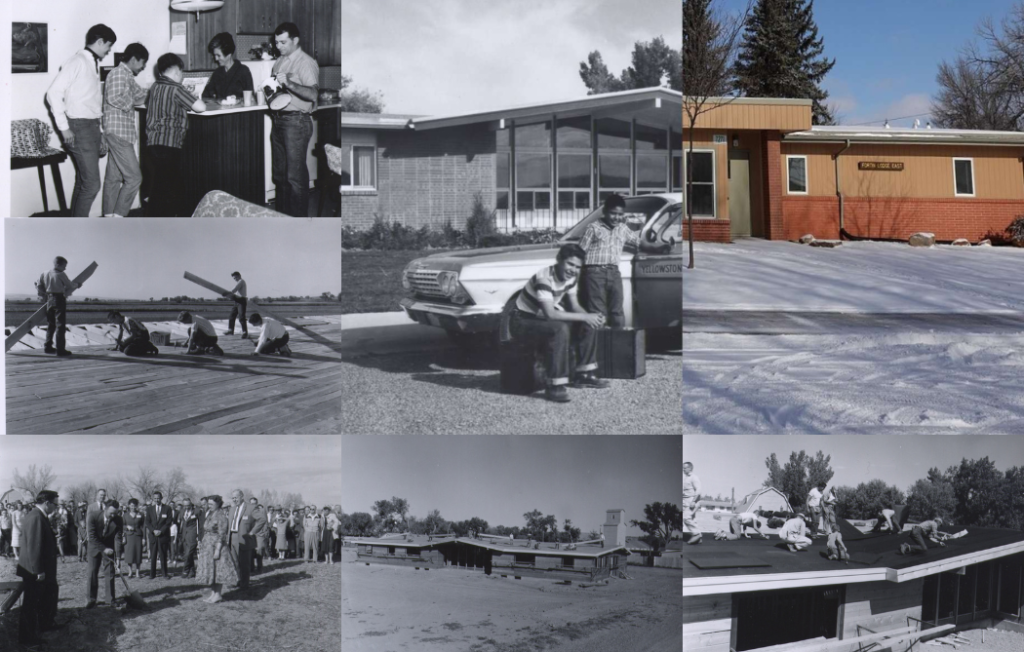
Some legacies are loud. Others are quietly lived, etched into the lives they’ve touched. Fortin Lodge at the Ranch stands as a tribute to the latter.
Built in 1961, Dorothy Fortin Lodge was the first home constructed at Yellowstone Boys and Girls Ranch with a house parent model. Named in memory of Dorothy Fortin, the kind and gracious wife of Phillip Fortin, the lodge reflects the couple’s enduring spirit of generosity.
The Fortins were among our earliest and most devoted supporters. Blessed in business, they believed deeply in giving back—and they did so with humility and joy. With open hearts and steadfast faith in our mission, they helped lay the foundation for the work we continue today.
Secret Santas and a Spirit of Giving
From 1959 to 1985, the Fortins quietly served as “Secret Santas” for the Ranch, making sure the children experienced the joy of Christmas through festive shopping trips and gifts. Though many were given anonymously, their impact was deeply felt.
Their generosity extended far beyond Yellowstone Boys and Girls Ranch, reaching into the heart of the Billings community and beyond. But their giving wasn’t just about resources—it was about creating stability, trust, and the feeling of being cared for.
A Home That Still Holds Meaning
Designed to house up to 36 boys, the lodge became more than a structure—it became a home. Today, Fortin Lodge stands tall as a testament to second chances and quiet generosity.
That legacy continues in the lives of those who once called it home. One former youth shared:
“Every so often, I pass through Billings and stop and say ‘Hi’ to any lodge staff who are there when I was. I feel it is important because they have a very difficult job, and they may not see the reward gained by their hard work. If I can go back ten years later and show them the positive results of their work, it may encourage or motivate them to continue.”
These words are a powerful reminder that the Fortins’ legacy lives on—in every life changed, every step forward, and every moment of hope sparked within those walls.
Learn More About Our History
Visit our History page to explore the story—and the caring people—who gave birth to our mission. Their vision continues to touch the lives of thousands of youth across Montana and beyond each year.
Want to dive deeper? You can also find A Legacy of Caring, written by our founder, Franklin Robbie, on Amazon.
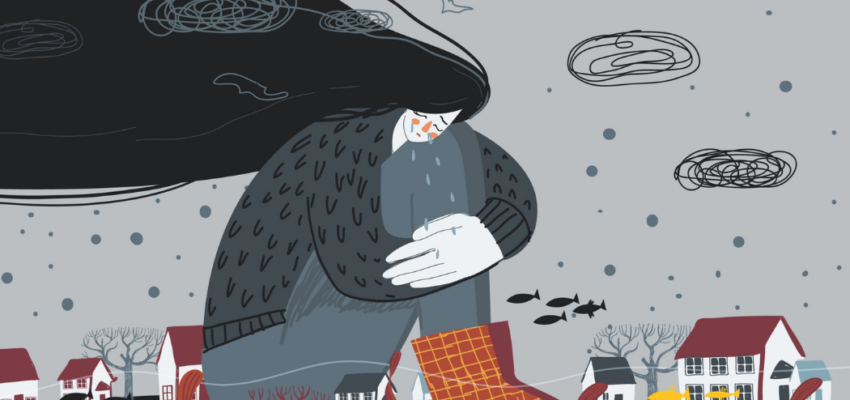
Saving Lives: Understanding Suicide Risk Factors
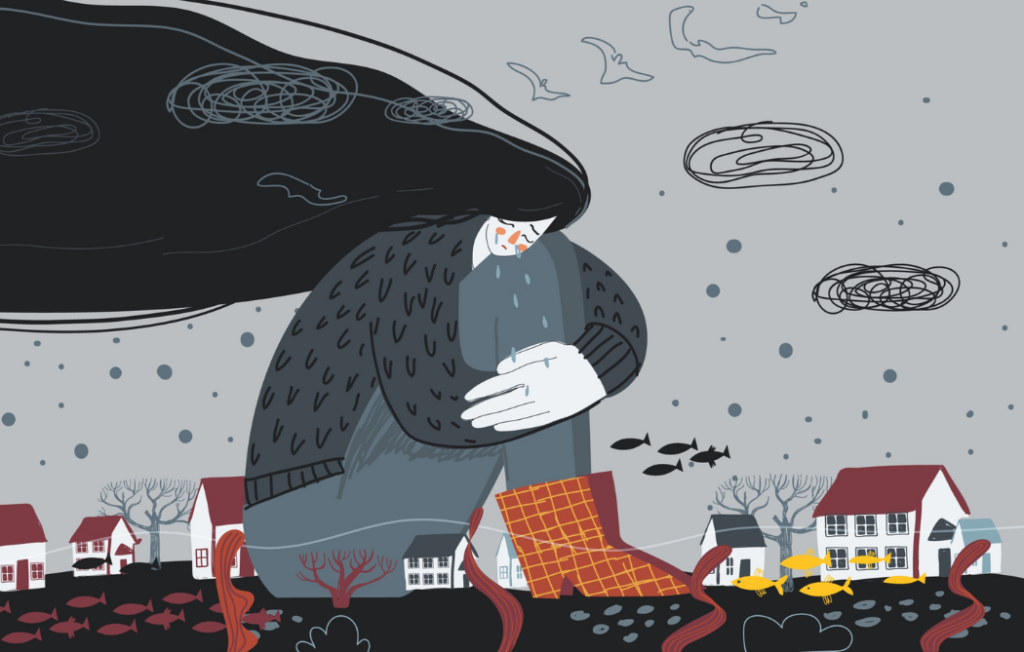
A 2020 survey by the CDC found that 1 in 4 young adults has considered suicide. More than half of us have been touched by it in some way. Globally, suicide claims more lives than war, murder, and natural disasters combined.
September is Suicide Prevention Month, and we’re exploring suicide risk factors.
Below is Alexandra Valoras’ story, told in her family’s words. Alexandra was a straight-A student, class officer, and robotics whiz. Her death is a heartbreaking reminder that even those who seem to be thriving can be at risk.
Understanding suicide risk factors helps us see what isn’t always visible on the surface.
Risk Factors
Research shows there isn’t one single cause of suicide—it’s often the result of multiple risk factors coming together.
Prior suicide attempts
For every death by suicide, there are an estimated 25 attempts.
Mental health conditions
According to the American Foundation for Suicide Prevention, 90% of people who die by suicide had a diagnosable mental health condition.
- Depression: Up to 60% of those who die by suicide experience clinical depression.
- Bipolar disorder: 1 in 5 people with bipolar disorder will die by suicide.
- Schizophrenia: Up to 13% of people with schizophrenia die by suicide.
Lack of access to mental health care
Without treatment, the risk of suicide rises significantly.
Substance misuse
Drugs and alcohol can impair judgment and increase impulsivity.
Prolonged stress
Harassment, bullying, relationship struggles, or unemployment elevate risk.
Significant life events
Divorce, financial crisis, grief, or major transitions (such as retirement) can heighten vulnerability.
Social isolation
Loneliness has been shown to increase risk for depression, anxiety, and premature death—rivaling the risks of smoking, obesity, and inactivity.
Chronic or terminal illness
Roughly 10% of suicides are linked to serious health conditions.
Access to lethal means
85% of suicide attempts with a gun are fatal, compared to 4% using other methods. Safe firearm storage is a key protective measure for youth.
Recent loss by suicide
Losing a friend or loved one to suicide can increase personal risk.
Protective Factors
Protective factors are personal or environmental characteristics that reduce risk and help people cope with life’s challenges.
Below are several protective factors that can mitigate risk of suicide.
- Access to effective behavioral health care
- Strong connections with family, friends, and community
- Life skills such as problem-solving, coping, and ability to adapt to change
- Self-esteem and a sense of meaning or purpose in life
- Cultural, religious, or personal beliefs that discourage suicide
What to Do if Someone Is Struggling
If you’re concerned about someone, don’t be afraid to ask directly about suicide. You won’t “put the idea” in their head—many people feel relief when someone cares enough to ask.
If someone shares that they’re considering suicide:
- Stay with them if they have immediate plans and means.
- Take them to the emergency room to be evaluated by a mental health professional.
- Call 911 if they’re in immediate danger.
Learn More: How to Talk to Someone About Suicide
If Your Child Is Struggling
Help is here. We provide mental health support for youth and families across Montana. Contact us here to get help for your child.
Learn More: 9 Warning Signs of Teen Suicide Parents Need to Know
If You’re Struggling
You don’t have to carry the weight alone. Reach out to a trusted friend or family member, and don’t hesitate to call 988 to connect with the National Suicide Prevention Lifeline. Support is just a call away.
Want to Learn More?
If you found this article helpful, check out the rest of our blog today and follow us on social media. You can find us on LinkedIn at Yellowstone Boys and Girls Ranch, Instagram at @ybgr_cares, and Facebook at Yellowstone Boys and Girls Ranch and YBGR.

Yellowstone Conference: Stronger Together, Building Strategic Partnerships for Lasting Impact

Join us for a day of inspiration, learning, and collaboration designed to strengthen partnerships and spark lasting impact.
Yellowstone Conference 2025 at a Glance:
Topic: Stronger Together, Building Strategic Partnerships for Lasting Impact
Date: Thursday, October 2, 2025
Time: 8:30 AM – 4:30 PM
Location: 1701 Ray of Hope Lane, Billings, MT.
Tickets: Click here to purchase tickets on Eventbrite
Credits: 5.75 CEUs & 6 OPI credits available
Format: In-Person or Virtual | Lunch & Snacks Provided
This annual gathering unites leaders, innovators, and changemakers from across sectors to exchange ideas, celebrate successes, and spark new opportunities for growth. Through dynamic panel discussions and interactive networking, participants will gain practical tools, fresh perspectives, and stronger connections to drive meaningful, lasting impact in our communities.
Panel Topics & Descriptions
Strengthening Native American Partnerships: Leveraging Community Partnerships for Collective Impact
Moderator: Josie Brady, Native American Services Coordinator.
Panelists: Clint Valandra, Indigenous Education Coordinator, Billings Public Schools | Charlene “Charli” Sleeper, Founder, MMIP Billings Advocacy Project; Mental Health Worker, Yellowstone Boys and Girls Ranch | Sunny Day Real Bird, Director of American Indian Outreach, Montana State University Billings | David R. Blaine, CEO, Crow Times Youth and Elder Works
This panel emphasizes the importance of building strong, respectful, and mutually beneficial relationships with Native American communities. By fostering authentic partnerships, the effort seeks to honor cultural traditions, elevate community voices, and collaborate on shared goals. Leveraging cross-sector partnerships enhances access to resources, supports sustainable solutions, and drives collective impact. The focus is on long-term trust, equity, and shared decision-making to strengthen outcomes for Native youth in their communities.
Empowering Excellence: Strengthening Workforce Development through Higher Education Partnerships
Moderator: Kristin Thompson, Associate Director of Human Resources.
Panelists: James C. Petrovich, PhD, MSW, Professor & Department Chair; Founding Director, Master of Social Work Program, Carroll College | Kate Chapin, MSW, LCSW, Executive Director, Center for Children, Families, and Workforce Development, University of Montana | Becky Lyons, EdD, Director of Career & Employment Services, Montana State University Billings | Jen Chancellor, MBA, University Development Counselor, Grand Canyon University
A strong, mission-aligned workforce is the backbone of effective nonprofit impact. This panel explores how strategic partnerships with higher education institutions can help build and sustain a pipeline of skilled, passionate professionals. These partnerships not only enhance organizational capacity but also ensure that services remain responsive, community-centered, and future-focused. Together, we can cultivate a workforce that’s ready to meet today’s needs—and tomorrow’s possibilities.
Mission-Driven Collaboration: Uniting Youth-Serving Organizations for Greater Reach
Moderator: Katie Gerten, Marketing & Communications Director.
Panelists: Matt Leavenworth, PhD, LCPC, Founder, Pay Love Forward; Vice Chair, Yellowstone County Suicide Prevention Coalition | Nina Hernandez, Executive Director, Friends of the Children – Eastern Montana; Nonprofit Leader & Consultant | Dennis Sulser, EdD, Retired CEO, Youth Dynamics; 40-Year Education & Healthcare Leader | Sarah Music, Director of Coordinated School Health, Montana Office of Public Instruction
When youth-serving organizations unite around a shared mission, their impact multiplies. By combining strengths and resources, partners expand reach and deepen support for kids and families. These collaborations close gaps and build stronger systems—especially in under-resourced areas—creating a more connected, resilient network of care that ensures youth get the support they need, when they need it.
Bridging Sectors, Building Futures: Public-Private Partnerships for Sustainable Change
Moderator: Mike Chavers, CEO.
Panelists: Sierra Riesberg, Social Services & Behavioral Health Systems Leader | Erika Purington, MS, CEO, Allies in Aging; Leadership Coach & Nonprofit Executive | Matt Bugni, CEO, AWARE | Meghan Peel, Interim Division Administrator, Behavioral Health & Developmental Disabilities Division, Montana DPHHS | Kirsten Smith, MPA, PMP, Principal, Bloom Consulting, LLC
When government, business, and community organizations come together, the results can be transformative. This panel explores how cross-sector collaboration sparks innovation, drives sustainable solutions, and strengthens communities for the long term.
Special Keynote Speaker
Mohini Venkatesh, Chief of Staff of the National Council for Mental Wellbeing
Conference Agenda
- Registration (8:30–9:00 AM)
- Welcome (9:00–9:15 AM)
- Strengthening Native American Partnerships Panel (9:15–10:30 AM)
- Break (10:30–10:45 AM)
- Empowering Excellence Panel (10:45–12:00 PM)
- Lunch (12:00–1:00 PM)
- Mission-Driven Collaboration Panel (1:00–2:15 PM)
- Dessert Break, Sponsored by Grand Canyon University (2:15–2:30 PM)
- Bridging Sectors, Building Futures Panel (2:30–3:45 PM)
- Keynote Speaker – Mohini Venkatesh (3:45–4:30 PM)
Have Questions About the Yellowstone Conference?
For questions about this event, please reach out to us at info@ybgr.org.
Stay Connected
Stay tuned to our news updates for the latest from across Montana, and follow us on social media. You can find us on LinkedIn at Yellowstone Boys and Girls Ranch, Instagram at @ybgr_cares, and Facebook at Yellowstone Boys and Girls Ranch.
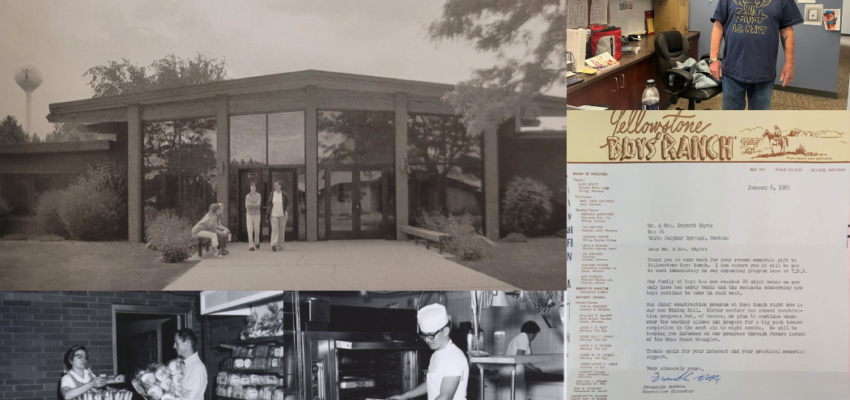
Lasting Legacy of Giving: The Story Behind Donald Nutter Memorial Dining Hall
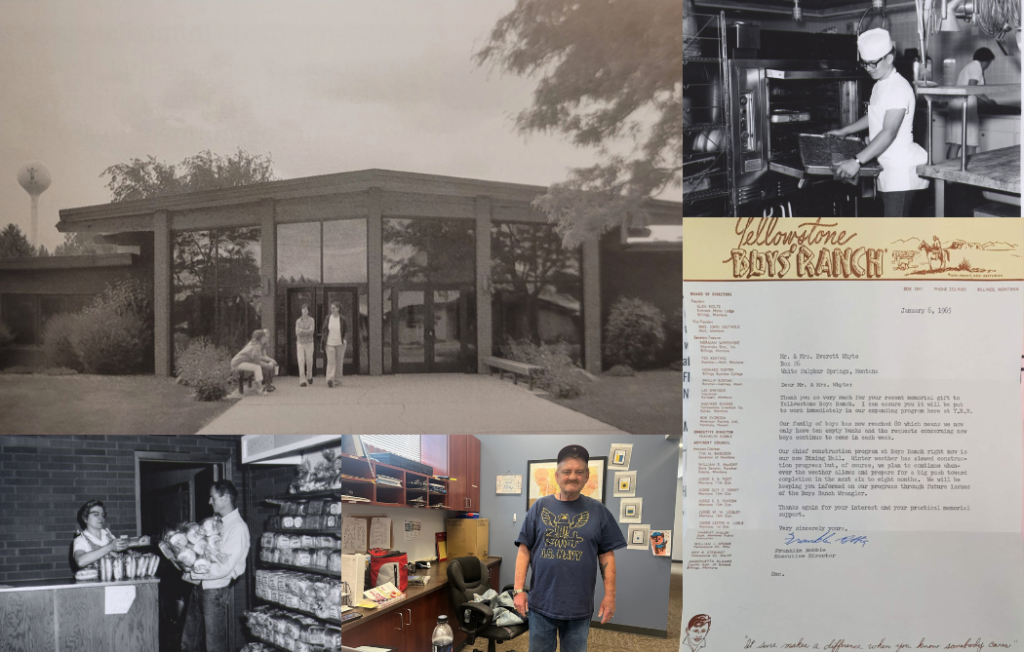
Can a $1 gift make a difference? At Yellowstone Boys and Girls Ranch, it always has.
From a heartfelt donation in 1964 to the hundreds of meals served each day with care, the story of Donald Nutter Memorial Dining Hall is one rooted in generosity, community, and small acts that build something lasting.
This beloved space at the Ranch stands today thanks to the many who gave—each gift, large or small, helped bring it to life.
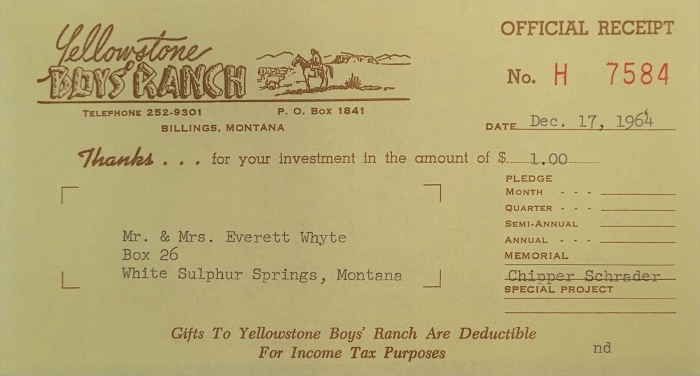
A powerful reminder of that came recently from John Whyte, our Admissions Coordinator in Great Falls. John shared a thank-you letter his parents received in 1965 from then-CEO Franklin Robbie, recognizing their $1 donation toward the Dining Hall’s construction.
Honoring a Tradition of Gratitude
A single dollar and a sincere note of gratitude. It’s a tradition the Yellowstone Foundation proudly carries on today—still sending handwritten thank-you letters to the donors who help power our mission.
Every gift matters. Every act of generosity leaves a mark.
A Space Built for Community, Nourishment, and Care
Named after Governor Donald Nutter, a Montana leader instrumental in the Ranch’s early years, the Dining Hall officially opened in 1966. That day, 450 people gathered to celebrate a new chapter—one centered around shared meals, belonging, and care.
Before the Ranch had a chapel, the Dining Hall served as a sacred space where kids gathered for Sunday morning services. It also became a cozy movie theater for monthly film nights, filling the room with laughter and community.
Still Feeding Hearts and Lives Today
Today, the Donald Nutter Memorial Dining Hall remains a cornerstone of daily life at the Ranch. The Sodexo team prepares and serves hundreds of meals each day, ensuring every child in our care is well-nourished and supported.
More than just a building, the Dining Hall is a symbol of what’s possible when people come together to give, build, and believe. It’s a space shaped by love, filled with stories, and sustained by the ongoing generosity of those who stand behind our mission.
Learn More About Our History
Visit our History page to explore the story—and the caring people—who gave birth to our mission. Their vision continues to touch the lives of thousands of youth across Montana and beyond each year.
Want to dive deeper? You can also find A Legacy of Caring, written by our founder, Franklin Robbie, on Amazon.

14 Quotes on Parenting When Triggered

What does it mean to parent when triggered? Often, our kids meet us with big emotions and behaviors that can stretch us and activate an in-kind response, particularly when we’re stressed or worn thin.
And at that moment, we’re challenged to slow down. To create space between our reaction and response so we can respond in love.
Below are fourteen quotes to help you with parenting when triggered.
Quotes on Parenting When Triggered
Quote 1: Kids don’t “make” us yell. They reveal to us where we have room to grow, where we have wounds to heal, and where we still have unresolved trauma from our own childhoods. – Inspired by Shelly Robinson
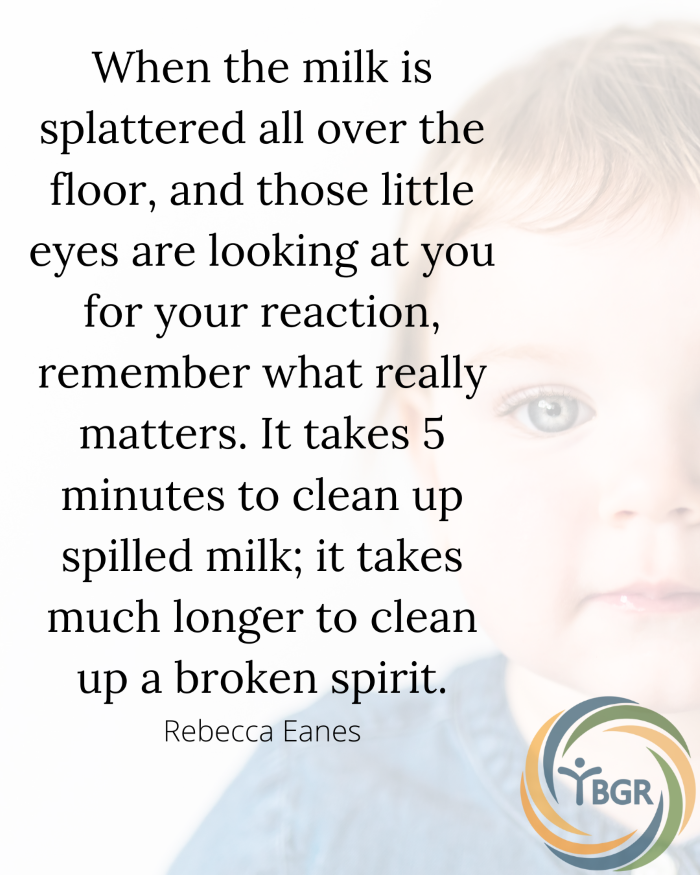
Quote 2: When the milk is splattered all over the floor, and those little eyes are looking at you for your reaction, remember what really matters. It takes 5 minutes to clean up spilled milk; it takes much longer to clean up a broken spirit. – Rebecca Eanes
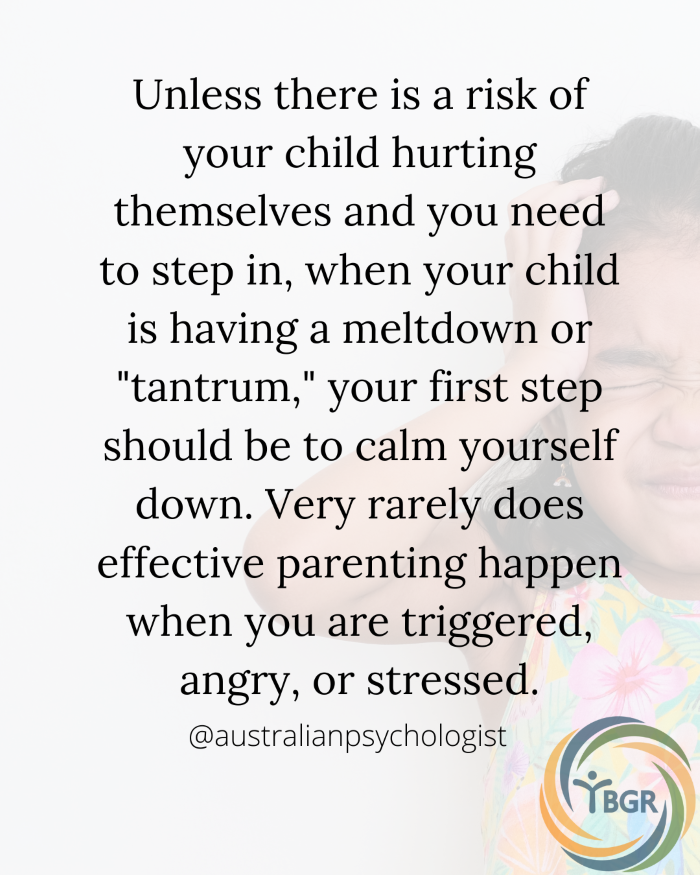
Quote 3: Unless there is a risk of your child hurting themselves and you need to step in, when your child is having a meltdown or “tantrum,” your first step should be to calm yourself down. Very rarely does effective parenting happen when you are triggered, angry, or stressed. – @australianpsychologist
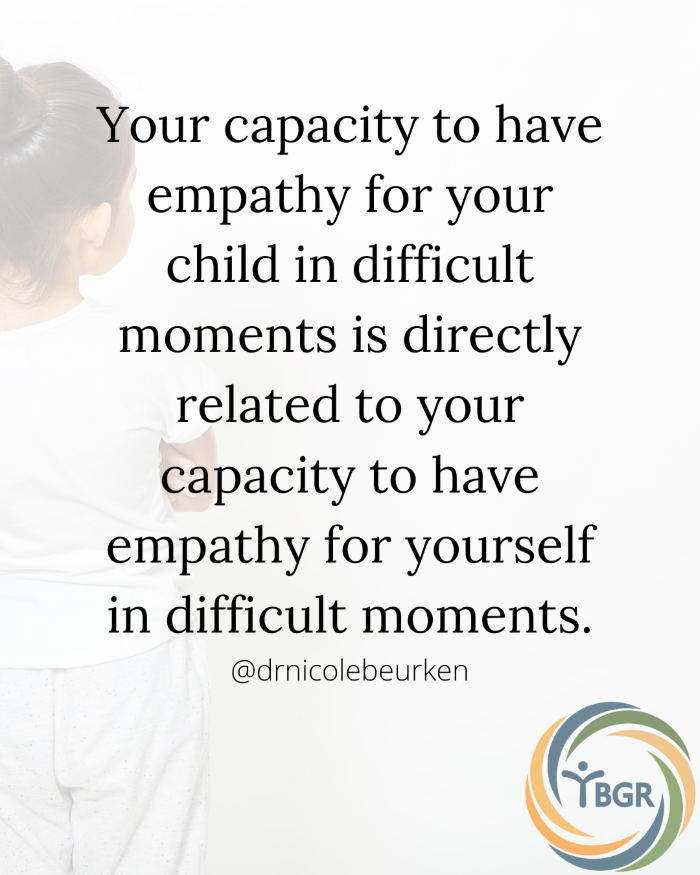
Quote 4: Your capacity to have empathy for your child in difficult moments is directly related to your capacity to have empathy for yourself in difficult moments. – @drnicolebeurken
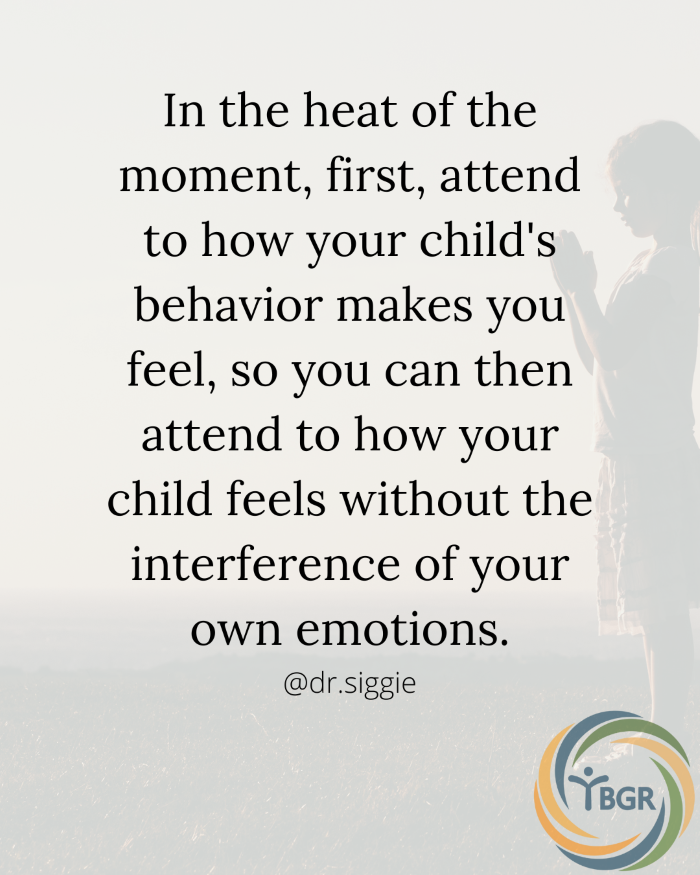
Quote 5: In the heat of the moment, first, attend to how your child’s behavior makes you feel, so you can then attend to how your child feels without the interference of your own emotions. – @dr.siggie
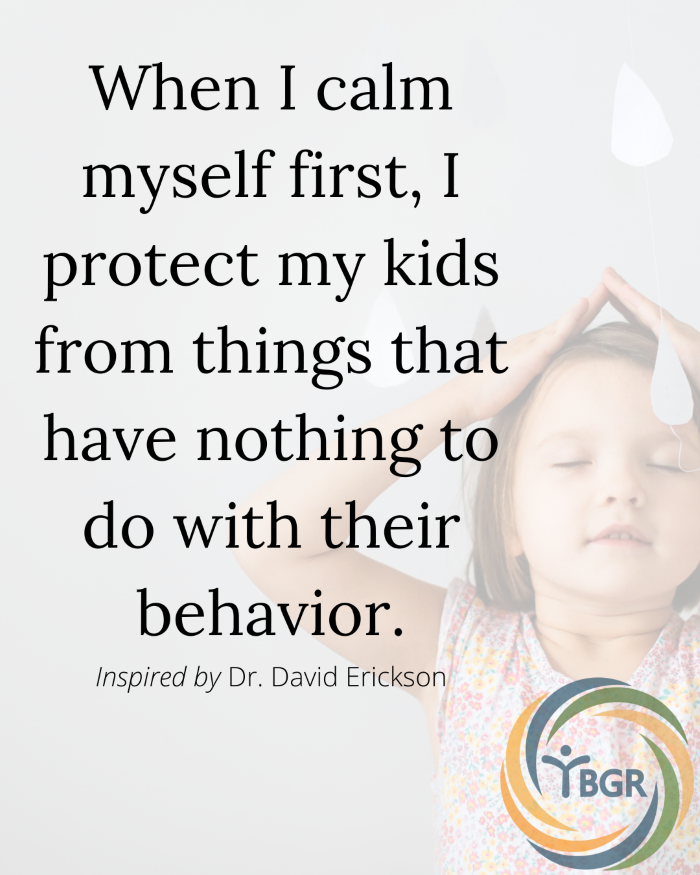
Quote 6: When I calm myself first, I protect my kids from things that have nothing to do with their behavior. – Inspired by Dr. David Erickson
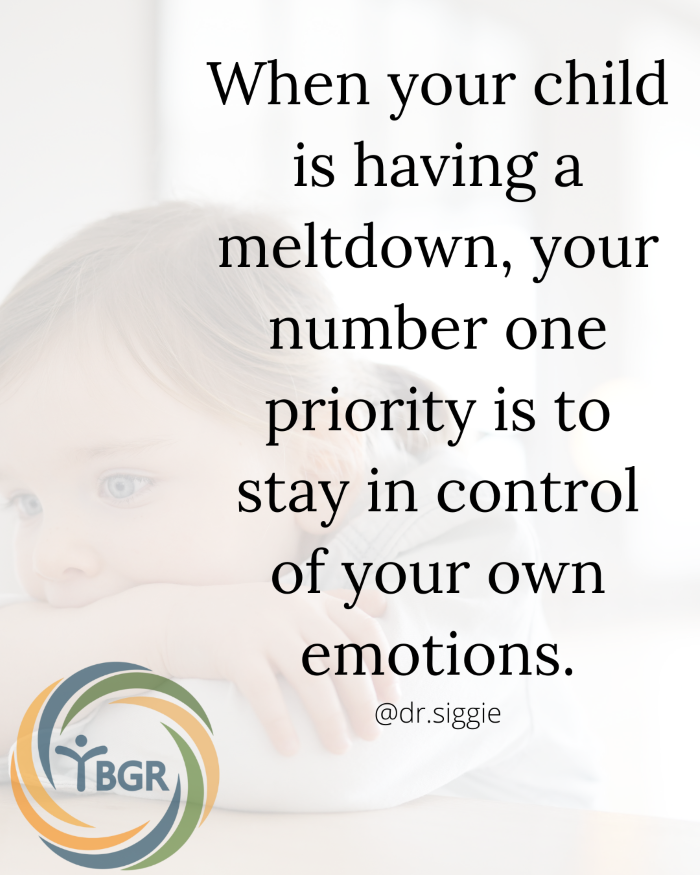
Quote 7: When your child is having a meltdown, your number one priority is to stay in control of your own emotions. – @dr.siggie
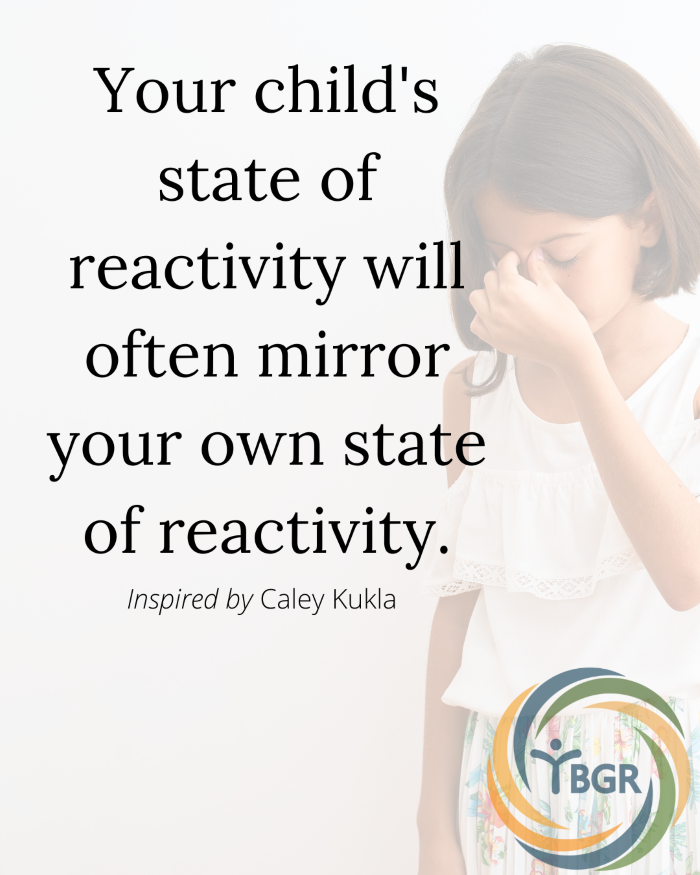
Quote 8: Your child’s state of reactivity will often mirror your own state of reactivity. – Inspired by Caley Kukla
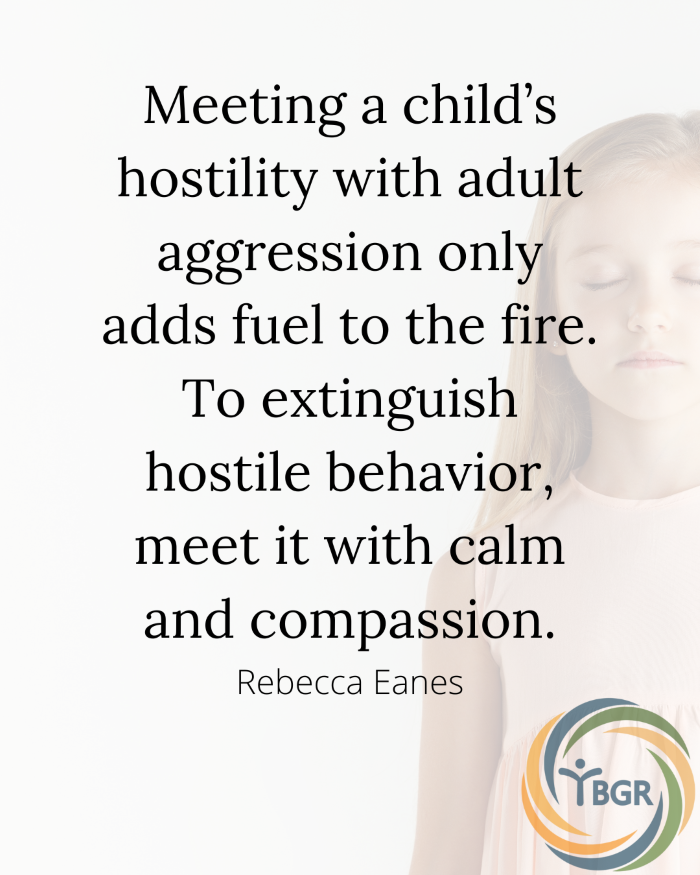
Quote 9: Meeting a child’s hostility with adult aggression only adds fuel to the fire. To extinguish hostile behavior, meet it with calm and compassion. – Rebecca Eanes
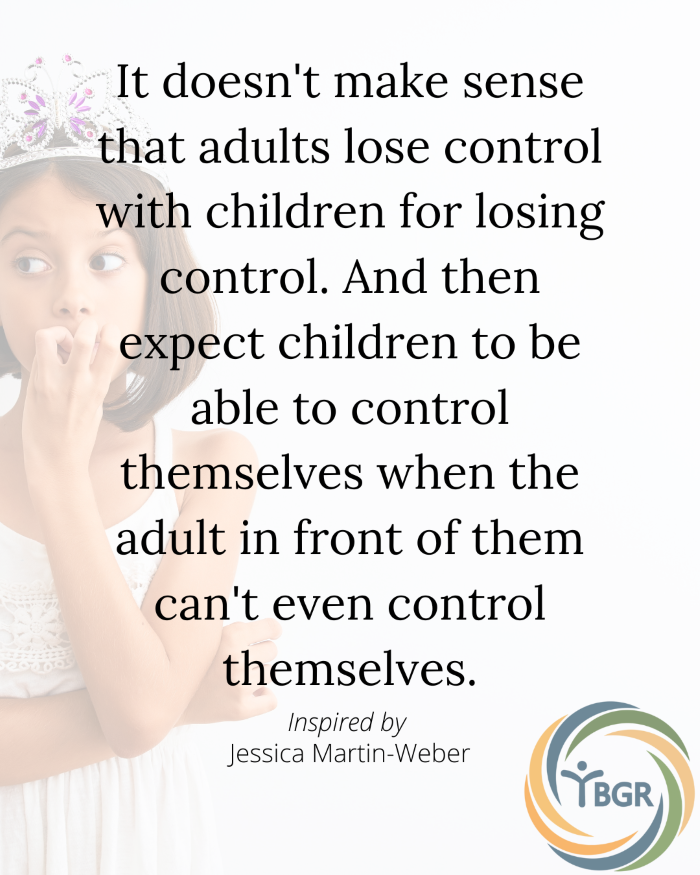
Quote 10: It doesn’t make sense that adults lose control with children for losing control. And then expect children to be able to control themselves when the adult in front of them can’t even control themselves. – Inspired by Jessica Martin-Weber
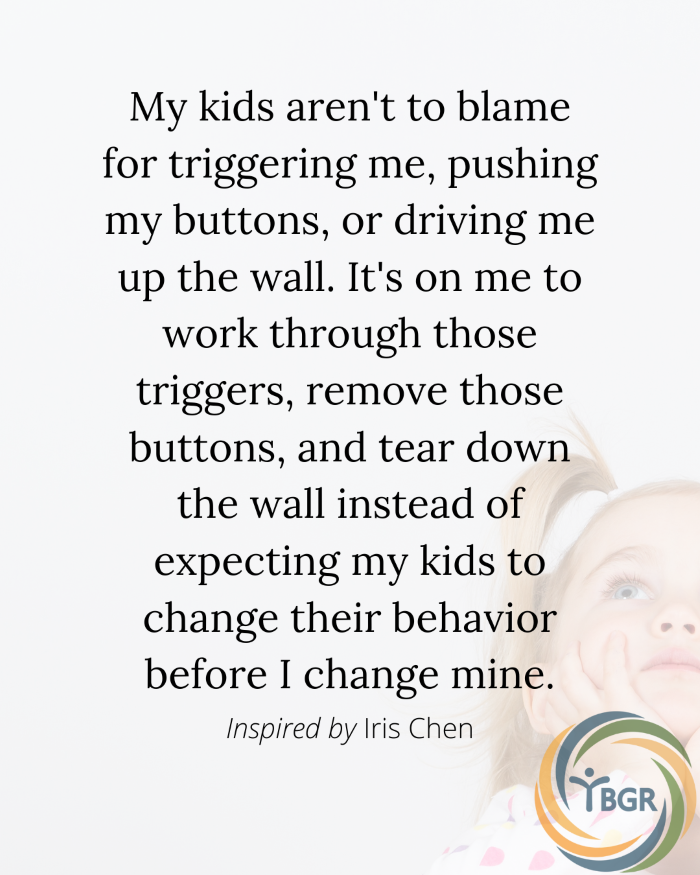
Quote 11: My kids aren’t to blame for triggering me, pushing my buttons, or driving me up the wall. It’s on me to work through those triggers, remove those buttons, and tear down the wall instead of expecting my kids to change their behavior before I change mine. – Inspired by Iris Chen
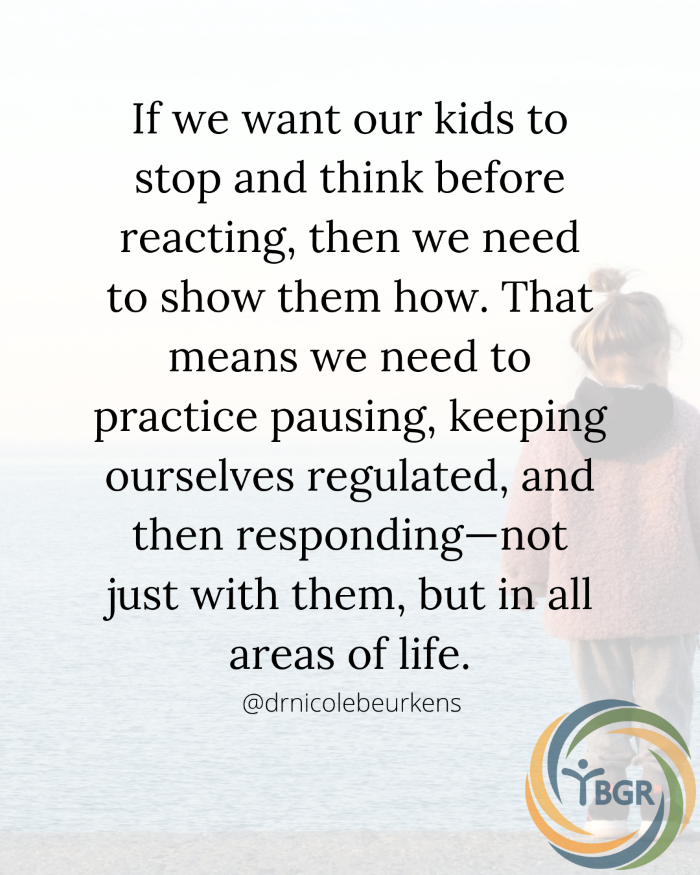
Quote 12: If we want our kids to stop and think before reacting, then we need to show them how. That means we need to practice pausing, keeping ourselves regulated, and then responding—not just with them, but in all areas of life. – @drnicolebeurken
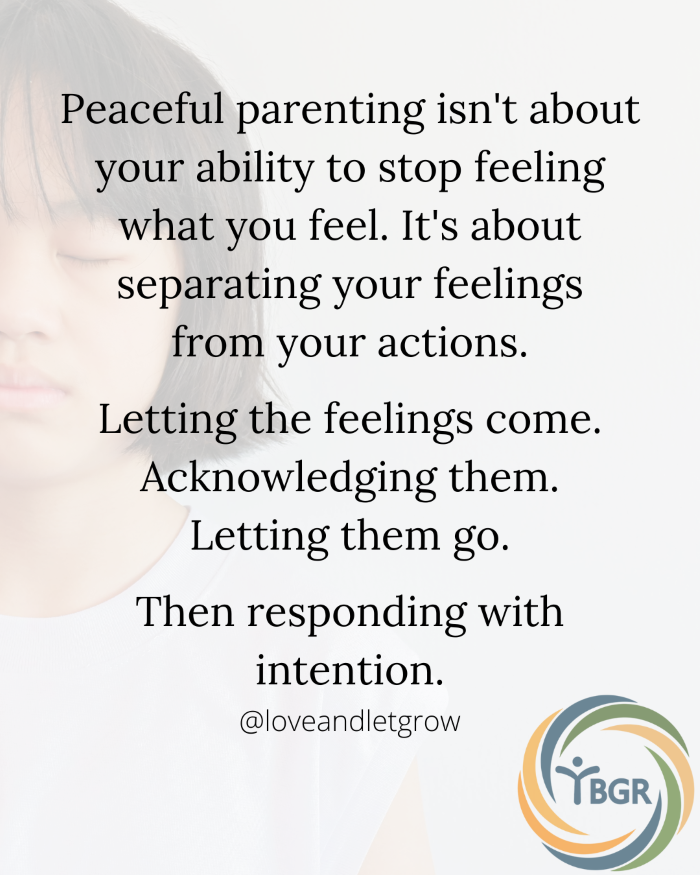
Quote 13: Peaceful parenting isn’t about your ability to stop feeling what you feel. It’s about separating your feelings from your actions. Letting the feelings come. Acknowledging them. Letting them go. Then responding with intention. – @loveandletgrow
Quote 14: Respond to children with the same connection and empathy for all their behaviors, and they’ll know your love isn’t conditional. That’s how you become their “safe space.” – Sarah R. Moore
Want More?
Check out the rest of our blog and follow us on social media. You can find us on LinkedIn at Yellowstone Boys and Girls Ranch, Instagram at @ybgr_cares, and Facebook at Yellowstone Boys and Girls Ranch.
Yellowstone Academy: A School Built on Belief and Possibility
Built from scratch. Backed by belief.
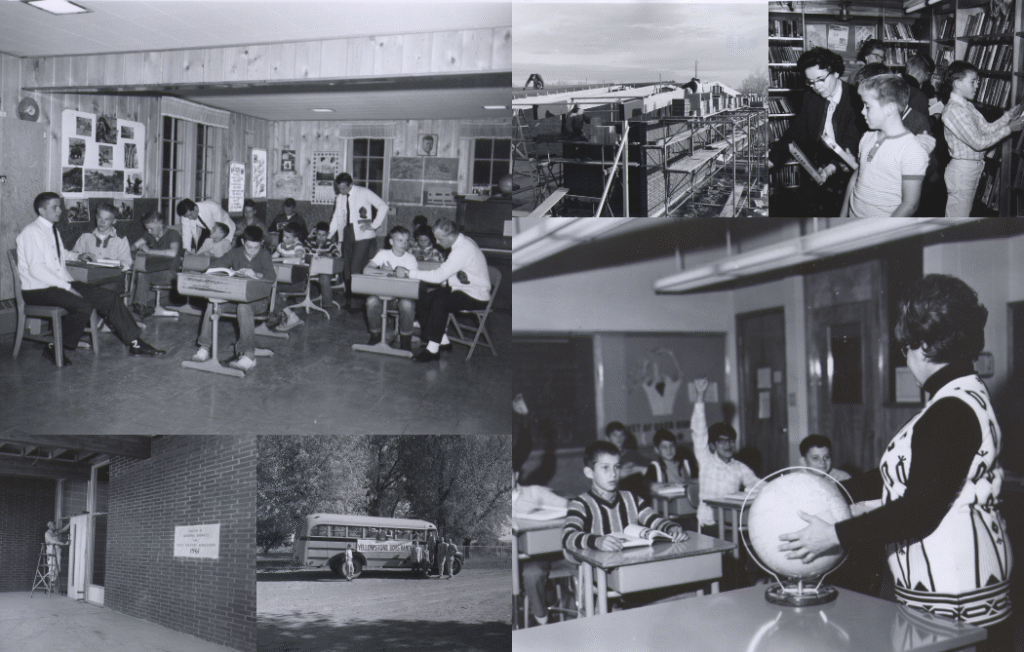
Yellowstone Academy began with salvaged desks, a makeshift classroom, and a simple but powerful vision: a place where every child has the chance to learn, heal, and grow. That first classroom marked a defining chapter in Yellowstone Academy history.
In 1959, inside a lodge furnished with desks from an abandoned schoolhouse, the vision came to life. The small space filled quickly with students who had experienced trauma, struggled in traditional classroom settings, and needed a different kind of learning environment—one grounded in patience, structure, and hope.
Students soon outgrew the space, overwhelming the nearby rural school system. It was clear that a new model of education was needed.
A “School Without Failure”
In 1961, generous local businesses stepped in with time, talent, and donated materials to help create what became known as a “school without failure”—a place where success was possible for children who had long felt left behind.
As one parent shared at the time:
“I’ve seen such a great change in my son. It’s the first time he’s been successful in a classroom—and received an A.”
Laying the Foundation for the Future
By September 16, 1965, School District 58 was officially established, allowing education and healing to grow hand in hand. What began as a four-room schoolhouse expanded through the generosity of caring donors such as Alvy Casper and the Heptner sisters, whose gifts helped create additional classrooms, an auditorium, and space for community day treatment.
In 1962, fifteen students proudly graduated from eighth grade—many for the first time in their lives. It was more than a graduation. It was proof that belief, structure, and opportunity could change a child’s path.
Yellowstone Academy History — A Legacy That Continues Today
Today, Yellowstone Academy continues to carry their original vision forward, writing the next chapter of Yellowstone Academy history each day. With small class sizes, individualized instruction, therapeutic support, and caring adults who meet students where they are, the Academy remains a place where youth rediscover their potential.
What began with salvaged desks and unwavering belief continues to transform lives—one student at a time.
Learn More About Our History
Visit our History page to explore the story—and the caring people—who gave birth to our mission. Their vision continues to touch the lives of thousands of youth across Montana and beyond each year.
Want to dive deeper? You can also find A Legacy of Caring, written by our founder, Franklin Robbie, on Amazon.