
Labels Hurt: How Mental Health Stigma Limits Care
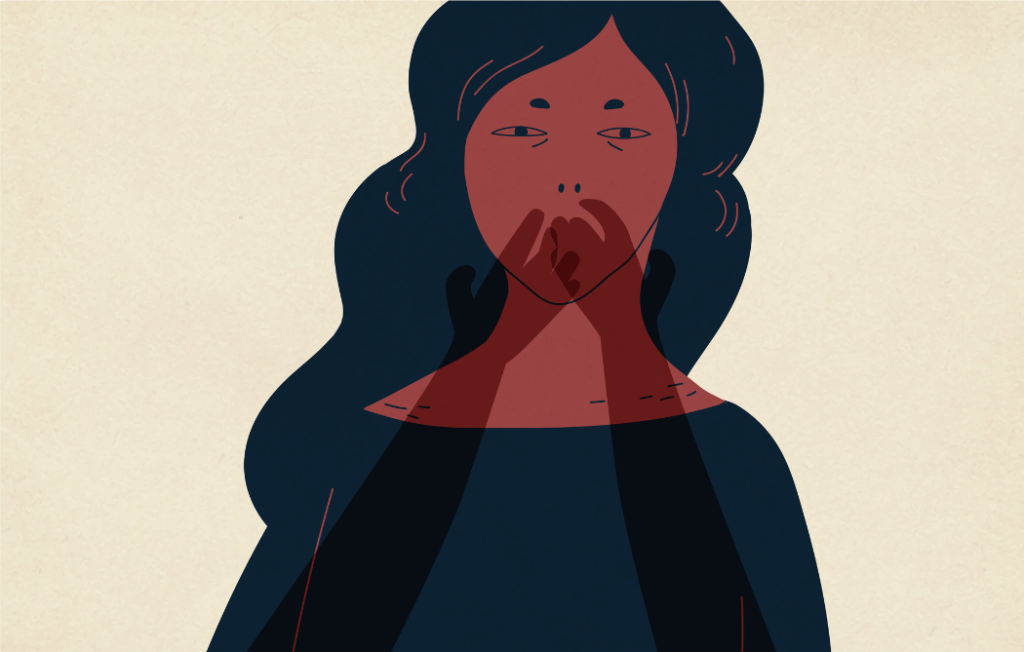
Mental health stigma remains one of the most significant barriers preventing people from seeking care, finding support, and feeling fully accepted in their communities.
Roughly 1 in 5 people live with a mental health condition. Yet despite how common these experiences are, stigma continues to shape how individuals are perceived—often reducing them to a label rather than recognizing them as whole people with strengths and potential.
How Mental Health Stigma Impacts Access to Care
Estimates show that as many as 70% of people afflicted with a mental health condition won’t seek treatment due to fear of judgment, discrimination, or social consequences.
Mental health stigma doesn’t just affect access to services. It’s associated with:
- Increased symptoms and poorer outcomes
- Social isolation and withdrawal
- Fewer educational and employment opportunities
- Reduced self-confidence and hope
In severe cases, the long-term impact of untreated mental health conditions can be life-threatening—not because care isn’t available, but because stigma stands in the way.
Why Labels Matter More Than We Realize
Have you heard of labeling theory? The framework dates back to the early work of French sociologist Emile Durkheim. It proposes that people come to identify and behave in ways that reflect the stigma associated with the labels we stick on them. Essentially, how we label people impacts their behavior.
But it doesn’t stop there. In the 1980s, the theory was revised to help explain the changes that take place in individuals diagnosed with mental health conditions.
According to the modified framework, cultural ideas associated with mental illness become personally relevant to those who struggle. In turn, they foster negative self-beliefs, ultimately leading to secrecy around treatment and social withdrawal from connections they perceive will reject them.
Why a Strength-Based Perspective Matters: Evidence That Challenges Stigma
What if I challenged you to shift your thinking about those with mental illness? Aristotle once wrote, “No great genius has existed without a strain of madness,” and to a certain degree, his words still ring true.
In 2009, researchers identified a genetic link between creativity and certain mental health conditions. Their study focused on the gene neuregulin 1 and found that those who carry it tend to score higher in creativity while also having an increased likelihood of developing schizophrenia or bipolar disorder.
Do your research, and you’ll find a host of well-known minds who grappled with mental illness, including:
- Abraham Lincoln—Clinical Depression, Social Anxiety
- Ludwig van Beethoven—Bipolar Disorder
- Vincent van Gogh—Bipolar Disorder
- Isaac Newton—Bipolar Disorder
- John Nash—Schizophrenia
- Nikola Tesla—Obsessive-Compulsive Disorder
- Leo Tolstoy—Clinical Depression
- Edgar Allan Poe—Bipolar Disorder
And that list is far from exhaustive. Perform a simple Google search, and the results will shock you. There are so many bright, creative minds living with mental health conditions.
Putting a Strength-Based Approach Into Practice
Reducing mental health stigma requires changing how we talk about mental health—and what we choose to focus on.
Whether you’re a parent trying to find strategies to guide your child or a social worker attempting to improve outcomes for your clients, people grow best when we build on their strengths rather than focusing on their weaknesses.
And people confronting mental health issues? They’re no different! Mental illness often comes alongside a host of strengths, which too frequently get overshadowed by negative stigma.
Recognizing strengths doesn’t minimize the challenges people face. It acknowledges the full picture—one that stigma often obscures.
Tenets of a Strength-Based Approach
We can significantly improve outcomes by taking a strength-based approach. Below are nine guiding principles to help people thrive:
Everyone possesses a uniqueness that helps them evolve in their journey. Unique characteristics include:
- Potential
- Strengths
- Capabilities
What receives attention or focus becomes what we strive for, eventually becoming reality.
Be careful with your words and language. Our language creates our (and others’) reality.
Accept change. Life and our world are ever-evolving; don’t resist.
Support others authentically. You will see that your relationships are deeper and more meaningful.
The person is the storyteller of their own story.
Build on what you know to dream of the future.
Capacity building has multiple facets and organizations. Be flexible.
Be collaborative. Be adaptive and value differences.
Common Misbeliefs About People with Mental Illness
There’s a ton of misinformation out there that perpetuates stigma. Here are a few common misconceptions that negatively affect those living with mental health disorders.
People with mental illness are violent.
Only 3 to 5% of violent acts are carried out by people living with serious mental illness. In fact, those afflicted are more than ten times as likely to be the victim of violent crimes as the general population.
Mental illness is always the result of trauma.
Yes, trauma can aid in the underlying expression of genes linked to mental illness, but its presence isn’t always necessary. For instance, attention-deficit/hyperactivity disorder (ADHD), bipolar disorder, and schizophrenia all have strong biological markers. Their roots often run deep in family lineages, and brain scans reveal structural abnormalities in those afflicted.
Poor parenting is at the root of all mental health conditions.
Indeed, parents influence their children’s behaviors. And without question, abuse and neglect can aid in developing mental health challenges across the lifespan. But many conditions arise despite our best parenting efforts.
For example, years ago, we believed that parents were responsible if their child developed schizophrenia. However, while there is a genetic component—the disorder tends to run in families—there is no evidence that bad parenting causes it. Even if you have a parent with schizophrenia, your chances of getting it are less than 25%.
People with mental health disorders are stupid.
Just look at the list of brilliant minds we noted earlier. Honestly, the idea that people living with mental illness are less intelligent than the general population is a ridiculous notion. Many conditions correlate with genetic markers that show just the opposite.
Want More?
Check out the rest of our blog and follow us on social media. You can find us on LinkedIn at Yellowstone Boys and Girls Ranch, Instagram at @ybgr_cares, and Facebook at YBGR and Yellowstone Boys and Girls Ranch.