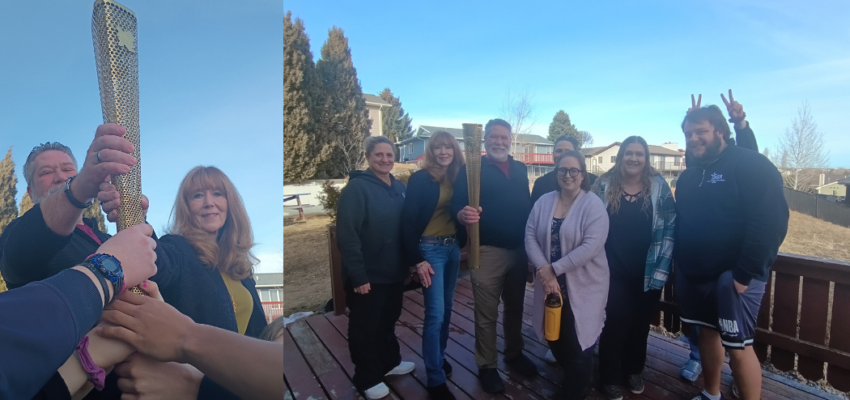
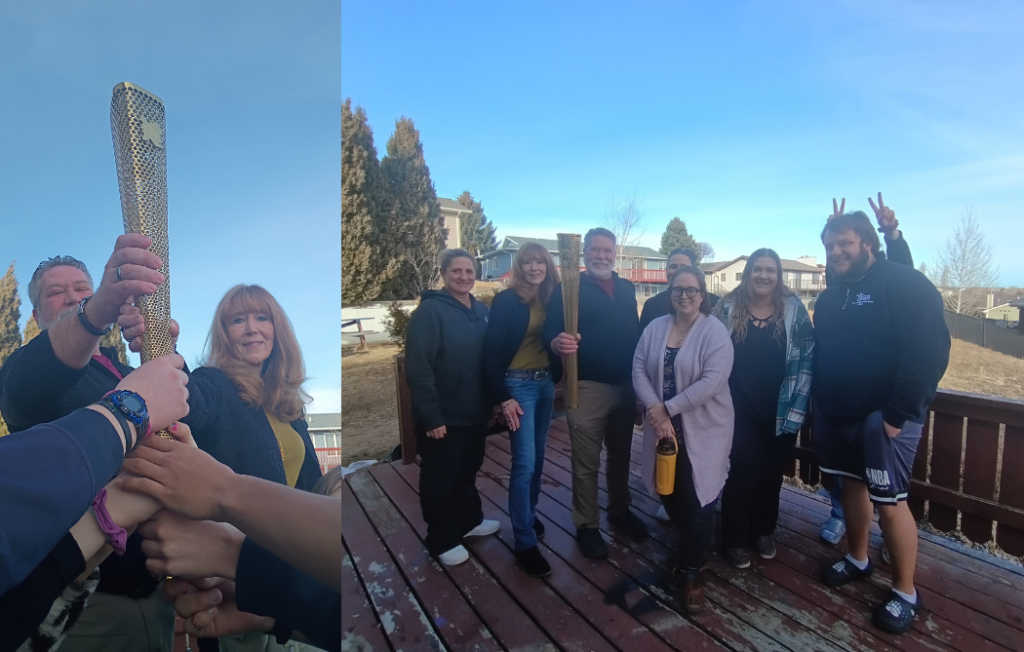
At North Skyline Group Home in Great Falls, our kids recently heard from an Olympic torchbearer—and had the chance to experience that moment for themselves.
Each child also had the chance to walk with the Olympic torch, turning Kathie’s story into something they could experience firsthand.
It showed how taking the first step can open the door to new possibilities.
Connecting Stories to Everyday Choices
Brittany Olson, Therapist, built on Kathie’s message by sharing Alysa Liu’s gold-medal performance. Her story reinforced that where you start doesn’t determine where you can go. The choices made along the way matter.
Thank you, Kathie, for sharing your story, and thank you to our North Skyline team for the care you bring each day as you prepare youth for life.
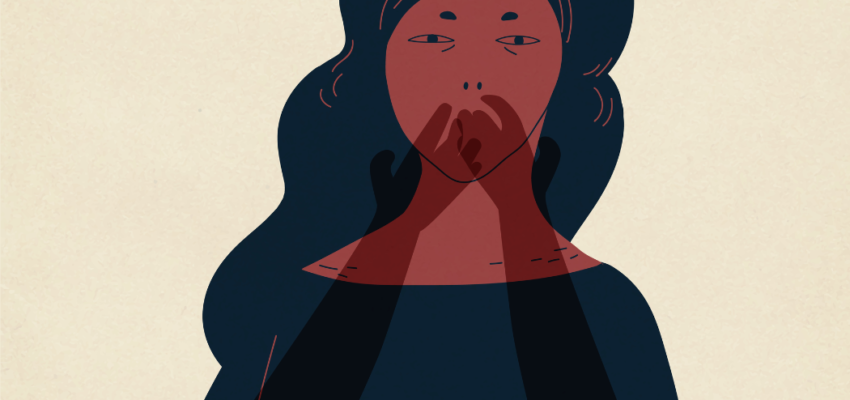
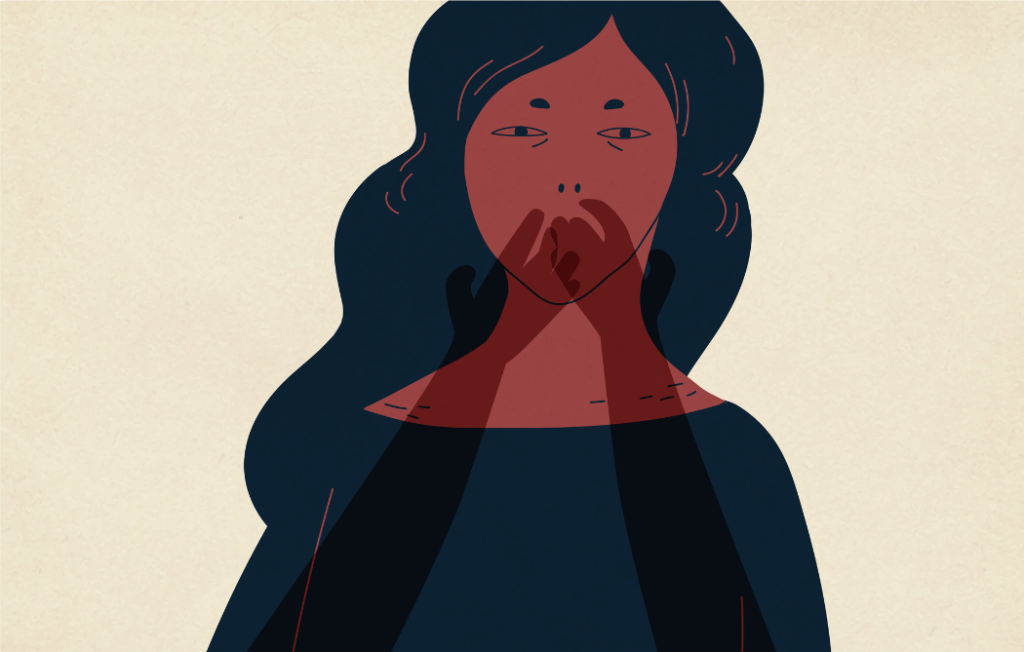
Mental health stigma remains one of the most significant barriers preventing people from seeking care, finding support, and feeling fully accepted in their communities.
Roughly 1 in 5 people live with a mental health condition. Yet despite how common these experiences are, stigma continues to shape how individuals are perceived—often reducing them to a label rather than recognizing them as whole people with strengths and potential.
Mental health stigma doesn’t just affect access to services. It’s associated with:
Increased symptoms and poorer outcomes
Social isolation and withdrawal
Fewer educational and employment opportunities
Reduced self-confidence and hope
In severe cases, the long-term impact of untreated mental health conditions can be life-threatening—not because care isn’t available, but because stigma stands in the way.
Why Labels Matter More Than We Realize
Have you heard of labeling theory? The framework dates back to the early work of French sociologist Emile Durkheim. It proposes that people come to identify and behave in ways that reflect the stigma associated with the labels we stick on them. Essentially, how we label people impacts their behavior.
But it doesn’t stop there. In the 1980s, the theory was revised to help explain the changes that take place in individuals diagnosed with mental health conditions.
According to the modified framework, cultural ideas associated with mental illness become personally relevant to those who struggle. In turn, they foster negative self-beliefs, ultimately leading to secrecy around treatment and social withdrawal from connections they perceive will reject them.
Why a Strength-Based Perspective Matters: Evidence That Challenges Stigma
What if I challenged you to shift your thinking about those with mental illness? Aristotle once wrote, “No great genius has existed without a strain of madness,” and to a certain degree, his words still ring true.
Do your research, and you’ll find a host of well-known minds who grappled with mental illness, including:
Abraham Lincoln—Clinical Depression, Social Anxiety
Ludwig van Beethoven—Bipolar Disorder
Vincent van Gogh—Bipolar Disorder
Isaac Newton—Bipolar Disorder
John Nash—Schizophrenia
Nikola Tesla—Obsessive-Compulsive Disorder
Leo Tolstoy—Clinical Depression
Edgar Allan Poe—Bipolar Disorder
And that list is far from exhaustive. Perform a simple Google search, and the results will shock you. There are so many bright, creative minds living with mental health conditions.
Putting a Strength-Based Approach Into Practice
Reducing mental health stigma requires changing how we talk about mental health—and what we choose to focus on.
Whether you’re a parent trying to find strategies to guide your child or a social worker attempting to improve outcomes for your clients, people grow best when we build on their strengths rather than focusing on their weaknesses.
And people confronting mental health issues? They’re no different! Mental illness often comes alongside a host of strengths, which too frequently get overshadowed by negative stigma.
Recognizing strengths doesn’t minimize the challenges people face. It acknowledges the full picture—one that stigma often obscures.
Everyone possesses a uniqueness that helps them evolve in their journey. Unique characteristics include:
Potential
Strengths
Capabilities
What receives attention or focus becomes what we strive for, eventually becoming reality.
Be careful with your words and language. Our language creates our (and others’) reality.
Accept change. Life and our world are ever-evolving; don’t resist.
Support others authentically. You will see that your relationships are deeper and more meaningful.
The person is the storyteller of their own story.
Build on what you know to dream of the future.
Capacity building has multiple facets and organizations. Be flexible.
Be collaborative. Be adaptive and value differences.
Common Misbeliefs About People with Mental Illness
There’s a ton of misinformation out there that perpetuates stigma. Here are a few common misconceptions that negatively affect those living with mental health disorders.
Yes, trauma can aid in the underlying expression of genes linked to mental illness, but its presence isn’t always necessary. For instance, attention-deficit/hyperactivity disorder (ADHD), bipolar disorder, and schizophrenia all have strong biological markers. Their roots often run deep in family lineages, and brain scans reveal structural abnormalities in those afflicted.
Poor parenting is at the root of all mental health conditions.
Indeed, parents influence their children’s behaviors. And without question, abuse and neglect can aid in developing mental health challenges across the lifespan. But many conditions arise despite our best parenting efforts.
For example, years ago, we believed that parents were responsible if their child developed schizophrenia. However, while there is a genetic component—the disorder tends to run in families—there is no evidence that bad parenting causes it. Even if you have a parent with schizophrenia, your chances of getting it are less than 25%.
People with mental health disorders are stupid.
Just look at the list of brilliant minds we noted earlier. Honestly, the idea that people living with mental illness are less intelligent than the general population is a ridiculous notion. Many conditions correlate with genetic markers that show just the opposite.
We’re excited to announce that Leslin Ossoff recently earned her Doctor of Philosophy in Counselor Education and Supervision.
This achievement reflects years of focused study, applied research, and leadership development that strengthens the care we deliver to kids and families across Montana.
Over the past six years, Dr. Ossoff has served in multiple direct-service roles at YBGR and now leads as Regional Clinical Manager in Livingston. She brings clinical expertise, curiosity, and compassion into her work—supporting teams and strengthening outcomes for the kids and families they serve.
Building Strong Foundations Through Leadership
When we invest in leadership, we strengthen care across programs and improve continuity for those we serve. Leaders like Dr. Ossoff help guide our teams with integrity, grounded practice, and a deep belief in people’s capacity to heal and grow.
We’re grateful for the expertise and leadership Dr. Ossoff brings to YBGR and proud to recognize this important professional milestone.
Did you know some of the most impactful leaders are the ones who make room for others to grow? At the Ranch, leadership isn’t about taking the spotlight—it’s about recognizing strengths, building trust, and supporting people as they step into new roles.
That leadership is on full display at Shumaker Lodge through Emily Barnhart, Program Manager, and Fallon Hain, Lead Mental Health Worker.
Creating Space for Growth Through Leadership
Strong teams grow when people feel trusted and supported.
When Fallon transitioned into her role as Lead Mental Health Worker, Emily was quick to deflect credit.
“Whenever someone approaches me about Fallon’s transition to our Lead Mental Health Worker, I often get told I have done well as her supervisor and have helped her grow into this role. However, from my perspective, I didn’t do anything special but allow her to lean into her own strengths and provide her with support and guidance.”
That approach reflects how leadership shows up at the Ranch—by creating space for growth and encouraging people to bring their strengths forward.
Leading From Strength
In her role, Fallon supports and trains other Mental Health Workers, brings thoughtful ideas to the table, and helps work through challenges as they arise.
Emily describes Fallon as a steady presence and trusted collaborator—someone who strengthens both the team and the care provided to youth.
“Fallon has not only helped provide training to other Mental Health Workers, but also to me. She provides great ideas and is extremely helpful at working through challenges as they arise. Fallon is truly my right hand and is a great example of a Lead Mental Health Worker.”
Growth That’s Felt — And Seen
From Fallon’s perspective, that trust made all the difference.
“Emily has by far been a Program Manager I fully trust. She helped me grow more in the last year than I could have ever imagined.”
Feeling seen and supported allowed Fallon to step confidently into her new role—demonstrating what growth can look like when leadership is rooted in trust and people are encouraged to develop their strengths.